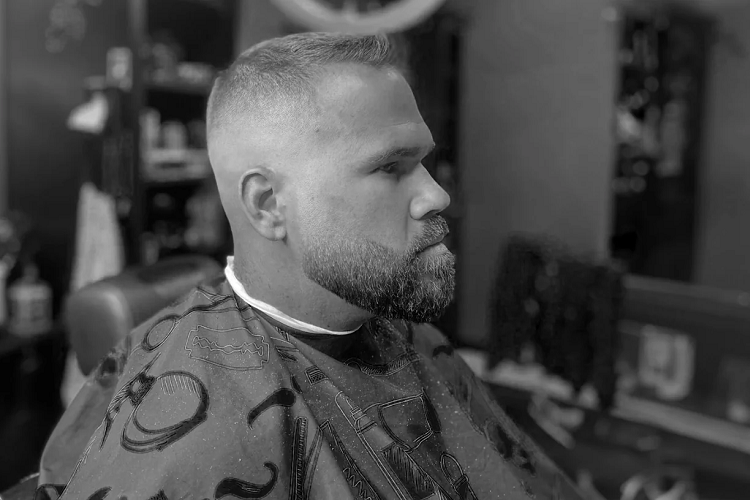
The taper beard fade changed the way I think about haircuts. Before I tried one, my beard and hair always felt like two separate things. The fade ended at the sideburn and the beard just started underneath it. No connection, no flow.
Once my barber tapered the fade into the beard, the whole shape of my face looked different. The haircut and the beard moved together instead of sitting apart. That smooth gradient from hair to skin to beard is what makes a taper beard fade stand out from a standard cut.
In this post, I’m covering the best taper beard fade styles, how to ask your barber for each one, and what face shapes they suit.
What Is a Taper Beard Fade?
A taper beard fade is a men’s haircut where the sides gradually shorten from the top of the head downward, and the fade blends directly into the beard at the sideburn area. The word taper refers to the gradual reduction in hair length. The word fade refers to the technique of blending different clipper guard lengths into each other so no hard lines appear.
The taper beard fade differs from a standard fade because the transition does not stop at the ear or sideburn. It continues into the facial hair, creating one continuous gradient from the top of the head to the jawline.
Why Is the Taper Beard Fade So Popular?
The taper beard fade is one of the most requested haircuts because it connects two parts of a man’s appearance into a single look. Most haircuts treat the hair and beard as separate zones. The taper beard fade treats them as one shape, which creates a cleaner profile.
It also works across different beard lengths and fade haircuts. Men with short stubble, medium beards, or full beards can all wear a taper beard fade. Barbers on Instagram and TikTok have pushed this style into mainstream visibility, and it now appears across all age groups and hair textures.
What Makes a Good Taper Beard Fade?
a) The Fade Gradient
The fade should move from longer to shorter without any visible steps between guard lengths. A barber typically starts with a #0 or #0.5 at the lowest point and works upward through #1, #1.5, and #2 guards. The transitions should be tight enough that you cannot see where one length ends and the next begins.
b) The Sideburn Transition
The sideburn area is where the taper beard fade lives or dies. The fade must flow into the beard without a gap or a sudden change in density. Your barber uses the clipper lever and a trimmer to feather the hair from the fade into the beard. A poor transition here makes the cut look unfinished.
c) The Beard Shape
The beard needs a defined cheek line, a clean neckline, and even length across the chin and jaw. Without these details, the taper fade above has nothing solid to connect to. A well-shaped beard gives the full taper beard fade haircut its finished, intentional appearance.
Top 8 Taper Beard Fade Styles
Each taper beard fade variation below changes the fade height, the beard length, or the top hairstyle.
1. Low Taper Beard Fade
The low taper beard fade starts the fade just above the ear, keeping more hair on the sides than other variations. The taper is subtle and conservative, which makes it a strong choice for office settings and job interviews. Paired with a medium-length beard, the low taper creates a soft frame around the face without sharp contrast. This version also grows out well, lasting 3 to 4 weeks before a touch-up is needed.
2. Skin Taper Beard Fade
The skin taper beard fade takes the lowest point of the fade all the way down to bare skin. The contrast between exposed skin and the beard is sharp and visible. This is the boldest version and works well with dense, dark beards where the contrast stands out. It needs a barber visit every 10 to 14 days because regrowth at the skin line shows fast.
3. Short Taper Beard Fade
The short taper beard fade keeps both the top hair and the beard at shorter lengths. The top sits at 1 to 2 inches, and the beard stays close to the face at around 5 to 10mm. This pairing is clean, low-effort, and works for men who want a tidy look without spending time on daily styling. A matte finish product on top and a quick beard trim every 4 to 5 days keeps this style in shape.
4. Mid Taper Beard Fade
The mid taper beard fade places the fade starting point at the temple, roughly halfway up the side of the head. It removes more hair than a low taper but less than a high taper. This is the most balanced version and pairs well with almost any beard length. The mid beard fade gives visible contrast without looking too aggressive.
5. High Taper Beard Fade
The high taper beard fade begins the fade close to the crown, removing the most hair from the sides. The beard becomes a key visual anchor because the sides of the head are nearly bare. A fuller, shaped beard balances the high contrast and keeps the look proportional. This variation suits men with thick hair on top who want maximum definition.
6. Clean Taper Beard Fade
The clean taper beard fade focuses on sharp edges and tight lines throughout the cut. The hairline is lined up with a straight razor, the cheek line is defined, and the neckline is carved precisely. The fade itself may be low, mid, or high. What makes this version distinct is the attention to every edge. It looks best in the first 5 to 7 days after a barber visit.
7. Long Taper Beard Fade
The long taper beard fade pairs the taper with a beard that extends 2 inches or more below the jawline. The longer beard creates a strong contrast against the faded sides. This version works for men with thick, even beard growth. Beard balm and a boar bristle brush help control the length and train the hair downward. A low or mid taper on top keeps the proportions balanced.
8. Taper Beard Fade for Black Men
The taper beard fade is a suitable beard style for black men with coarser, tightly coiled hair textures. The fade contrast is more pronounced on darker, denser hair, giving the cut a sharper appearance. A line up at the forehead and temples frames the face. The beard can be shaped into a squared-off or rounded style. Curl sponges on top add texture, and beard oil keeps facial hair soft.
What Face Shape Suits a Taper Beard Fade?
The taper beard fade works across most face shapes when the right variation is paired with the right beard length.
- Oval faces suit nearly every taper beard fade variation. A mid taper with a medium beard is a reliable starting point for this shape.
- Round faces benefit from a high taper beard fade with a fuller beard on the chin. The added vertical length offsets the width of a round jawline.
- Square faces work well with a low taper beard fade and a slightly rounded beard. The softer fade and beard shape prevent the look from appearing too angular.
- Long or rectangular faces should pair a short taper beard fade with a shorter beard. Keeping the beard close to the face avoids adding extra length.
- Heart-shaped faces look best with a mid taper and a fuller beard around the chin. The volume at the bottom balances a wider forehead.
How to Taper Fade a Beard>
Knowing how to fade a beard helps you communicate with your barber and maintain the look at home. Here is the process.
- Step 1: Cut the fade first. The barber starts with the lowest guard at the bottom of the sides and works upward, blending through progressively longer guards. The fade is built before the beard is touched.
- Step 2: Shape the top. The hair on top is cut to the desired style, whether that is a textured crop, a comb over, or a buzz cut. The top length determines how much contrast the fade creates.
- Step 3: Blend the sideburns. The barber uses the clipper lever to open and close the blade gap while moving upward through the sideburn area. This creates the gradient between the fade and the beard.
- Step 4: Trim the beard to length. A guard is set on the trimmer and the beard is trimmed evenly across the cheeks, chin, and jawline. The length depends on the style you chose.
- Step 5: Define all edges. The hairline, temples, cheek line, and neckline are all cleaned up with a straight razor or detailer. These edges give the taper beard fade its finished look.
Taper Beard Fade vs Regular Beard Fade
The main difference between a taper beard fade and a regular beard fade is how far the blend extends. A regular fade ends at the sideburn, and the beard begins separately below it. A taper beard fade blends the fade directly into the beard so there is no break between haircut and facial hair.
Regular fades are quicker to cut and easier to maintain. Taper beard fades take more time and skill but produce a more connected, polished result. Men who keep their beards well-trimmed and visit the barber every 2 to 3 weeks get the most out of a taper beard fade.
FAQs
How often should you trim a taper beard fade?
A taper beard fade should be trimmed every 2 to 3 weeks to keep the fade gradient clean. The beard can be maintained at home with a trimmer set to your preferred guard length. The sideburn blend loses its shape first as hair grows, so that zone needs attention earliest.
How do you blend a taper fade into a beard?
A barber blends a taper fade into a beard by working the clipper lever at the sideburn transition point. The lever opens the blade gap to leave slightly more hair, creating a gradient between the shortest part of the fade and the top of the beard. A detailer cleans up any remaining hard lines.
What is the difference between a low taper beard fade and a skin taper beard fade?
The difference is the lowest point of the cut. A low taper beard fade starts the fade just above the ear and leaves a thin layer of hair at the bottom. A skin taper beard fade takes the bottom all the way to bare skin. The skin version creates a sharper contrast but needs more frequent touch-ups.
Can you get a taper beard fade with patchy facial hair?
Yes, a taper beard fade works with patchy facial hair if you keep the beard at a shorter length, around 3 to 5mm. The shorter length blends thin spots and still gives the jawline definition. A clean cheek line and neckline make the beard look shaped and intentional.
Why the Taper Beard Fade Delivers the Cleanest Look Every Time
Once I started asking for the taper into my beard instead of treating them as two separate cuts, the results were night and day. That connected gradient from haircut to facial hair is what gives this style its clean, pulled-together look.
Whether you go with a skin taper beard fade for maximum contrast or a low taper for something more conservative, the key is in the sideburn blend. Get that right, and the rest of the style falls into place. Explore more popular beard styles to find what pairs best with your fade.