
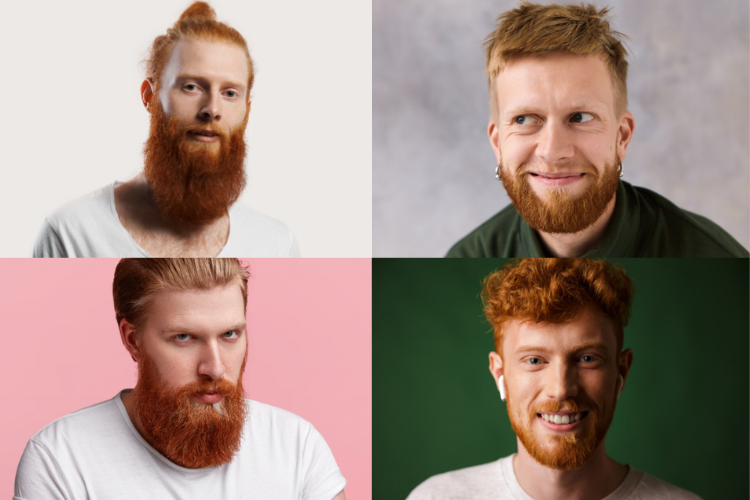
I grew my first full beard at 22 and was genuinely confused. My hair is dark brown, but the beard came in with a strong ginger tint, especially around the chin and jawline. I spent a good few weeks wondering if something was off before I found out this happens to a lot of men.
A ginger beard showing up under non-red hair is more common than most people think. It comes down to genetics, specifically a single gene variant that controls pigment in facial hair differently from head hair. Once I understood the science behind it, I stopped fighting the color and started working with it.
In this post, I’m covering why ginger beards happen, the best ginger beard styles, and how to take care of one properly.
What Is a Ginger Beard?
A ginger beard is facial hair that grows in with red, copper, or auburn tones. The ginger beard meaning refers specifically to the reddish color of the facial hair, not a particular style or length. Some men have a fully ginger beard, while others notice ginger hairs mixed into a brown or blonde beard.
The color can range from a light strawberry blonde to a deep copper red. It often shows up more strongly in sunlight. Many ginger beard men have head hair that is a completely different color, which is the part that catches most people off guard.
Why Do Some Men Have a Ginger Beard?
The reason some men have a ginger beard comes down to a gene called MC1R. This gene sits on chromosome 16 and controls how the body produces melanin, the pigment responsible for hair color. Head hair and facial hair can respond to different genetic signals, which is why they sometimes grow in different colors.
MC1R has a recessive variant that produces pheomelanin, a red-yellow pigment, instead of eumelanin, the dark brown-black pigment. A man only needs one copy of this variant to produce ginger tones in his beard, even if his head hair remains brown, black, or blonde. Two copies of the variant usually result in full red hair on both the head and face.
This explains why a brown hair ginger beard combination is so common. The MC1R variant affects facial hair follicles differently than scalp follicles, producing enough pheomelanin to create that reddish tone in the beard while the head hair stays dark.
What Is Ginger Beard Syndrome?
Ginger beard syndrome is an informal term used to describe the phenomenon of growing a red or ginger-toned beard while having non-red head hair. It is not a medical condition or a disorder. The term became popular online as more men noticed and discussed the mismatch between their head hair and facial hair color.
The cause is the same MC1R gene variant described above. Men with brown hair, black hair, or blonde hair can all carry the variant without knowing it until they grow a beard. Ginger beard syndrome affects an estimated 40 to 50 percent of men of Northern European descent who carry at least one copy of the MC1R variant.
Why Do I Have a Ginger Beard with Brown, Black, or Blonde Hair?
A brown hair ginger beard happens because the MC1R gene variant expresses differently in facial hair follicles than in scalp follicles. The follicles on your chin and cheeks produce more pheomelanin, giving the beard its reddish color, while the scalp follicles produce more eumelanin, keeping head hair dark.
A black hair ginger beard follows the same pattern. The contrast is more noticeable because the gap between dark head hair and red facial hair is wider. A blonde hair ginger beard tends to be less obvious because the color difference is smaller, but the ginger tone still shows in direct light.
In all three cases, the man carries at least one copy of the MC1R variant. The variant can come from either parent, and neither parent needs to have red hair themselves. They only need to carry the gene.
Best Ginger Beard Styles
Ginger beard styles work best when the cut complements the color rather than fighting it. The warm tones in a ginger beard catch light differently than darker beards, so shape and length matter.
1. Short Ginger Beard
A short ginger beard kept at 5 to 10mm highlights the color without overwhelming the face. The shorter length keeps the ginger tones even and uniform across the cheeks and chin. This is one of the most popular short ginger beard styles because it looks clean, shows off the natural color, and works with any hairstyle on top. Trim it every 4 to 5 days with a guard to keep the length consistent.
2. Long Ginger Beard
A long ginger beard at 2 inches or more makes a strong visual statement. The red tones become more varied at longer lengths, with lighter and darker shades appearing across different sections of the beard. Beard balm and a boar bristle brush keep the length manageable. This style suits men with thick, even growth who want the ginger color to be the focal point.
3. Ginger Beard with Stubble
Ginger stubble at 1 to 3mm adds a warm shadow to the jawline without committing to a full beard. The color reads as a subtle tint at this length, which works well for men whose ginger is mixed with brown or blonde hairs. A clean neckline and defined cheek line keep it looking intentional.
4. Ginger Beard with Fade
Pairing a ginger beard with a fade creates a sharp contrast between the faded sides of the head and the warm-toned facial hair. The transition from the fade into the ginger sideburns needs a clean blend so the color shift looks gradual. This combination works especially well with a brown hair ginger beard because the color change from scalp to face becomes part of the style.
5. Ginger Beard with Bald Head
A ginger beard paired with a shaved or bald head puts all the attention on the facial hair. The warm red tones stand out against bare skin, creating a bold, defined look. Keep the beard well-shaped with clean cheek and neck lines. This pairing works across all beard lengths. from stubble to a full ginger beard.
6. Ginger Goatee
A ginger goatee concentrates the red color around the chin and mouth, which draws attention to the center of the face. This style works for men with patchy cheek growth who have stronger coverage on the chin. The concentrated ginger color at the chin gives the face more structure without needing full beard coverage. Pair it with a clean-shaven or faded side for a sharper overall look.
What Face Shape Suits a Ginger Beard?
The ginger color works across all face shapes. The key is choosing the right beard length and shape for your face structure.
- Oval faces suit most ginger beard styles. A short to medium-length ginger beard keeps things proportional and lets the color stand out.
- Round faces benefit from a longer ginger beard with more length on the chin. The vertical shape helps elongate a round jawline.
- Square faces pair well with a slightly rounded ginger beard that softens the angular jaw. A medium length of 10 to 15mm works well here.
- Long faces should keep a short ginger beard to avoid adding more length. Stubble or a trimmed 5 to 8mm beard is the safest option.
- Heart-shaped faces look best with a fuller ginger beard around the chin and jaw to balance a wider forehead.
How to Maintain a Ginger Beard?
Ginger beard hair tends to be coarser and thicker than other beard colors. This is because the same MC1R variant that produces the red pigment also affects the texture of the hair strand. Ginger beard hairs often have a wider diameter, which makes them feel rougher to the touch.
- Wash 2 to 3 times per week with a beard-specific wash. Regular shampoo strips the natural oils that keep ginger hair soft.
- Apply beard oil daily with jojoba or argan oil to reduce dryness and add softness.
- Use beard butter to control the thicker texture and keep stray hairs in place.
- Protect from sun exposure as UV can fade ginger beard color over time. Use a beard oil or balm with UV protection, or apply a light layer of SPF to exposed facial skin.
- Care for sensitive skin underneath because lighter pigmentation means less natural sun protection under a ginger beard.
Should You Dye a Ginger Beard?
Whether to use ginger beard dye is a personal choice. Some men want to darken their beard to match their head hair. Others want to lean into the color and make it more vibrant. Both approaches work, but each has trade-offs.
Dyeing a ginger beard darker requires a semi-permanent or demi-permanent beard dye. Permanent dyes tend to look unnatural on facial hair because the beard grows out fast and the root line becomes visible within 7 to 10 days. A ginger beard dye product in a shade one step darker than your natural beard color gives the most natural-looking result. Avoid going too dark in one step, as it can look flat against lighter skin.
If you want to keep the ginger and make it stand out, skip the dye entirely. A tinted beard oil or a color-depositing conditioner can add warmth without permanently changing the shade. Most ginger beard men find that a well-groomed ginger beard in its natural color gets more positive attention than a dyed one.
FAQs
Why do I have ginger beard hairs?
Ginger beard hairs are caused by a variant of the MC1R gene on chromosome 16. This variant produces pheomelanin, a red-yellow pigment, in your facial hair follicles. You only need one copy of this gene variant to grow ginger beard hairs, even if your head hair is brown, black, or blonde.
Is a ginger beard genetic?
Yes, a ginger beard is genetic. The MC1R gene variant that produces the red pigment can be inherited from either parent. Neither parent needs to have red hair. They only need to carry one copy of the variant for it to appear in their son’s beard.
Can you dye a ginger beard brown?
Yes, you can dye a ginger beard brown using a semi-permanent or demi-permanent beard dye. Choose a shade one step darker than your natural ginger tone for a natural result. The dye will need reapplication every 2 to 3 weeks as the beard grows and the color fades.
Do ginger beards go grey?
Yes, ginger beards go grey over time like all beard colors. Ginger beards tend to shift toward a lighter, sandy tone before turning fully grey or white. The transition can take several years, and many men notice the change starting at the chin and sideburns first.
Why the Ginger Beard Is a Look Worth Owning
I spent a while being unsure about my ginger beard, especially since it didn’t match my head hair. Once I understood the genetics behind it and started treating the color as a feature instead of a flaw, everything changed.
A ginger beard stands out on its own. Keep it groomed, pick a style that works with the warm tones, and let the color do the work. Whether you go short, long, or somewhere in between, a well-maintained ginger beard is one of those things that gets better the more you commit to it. Check out more popular beard styles to see what pairs best with your look.

I’m a regular guy who got way too into beard care and started writing it all down. Everything here comes from my own experience with my own beard, not from a brand brief.