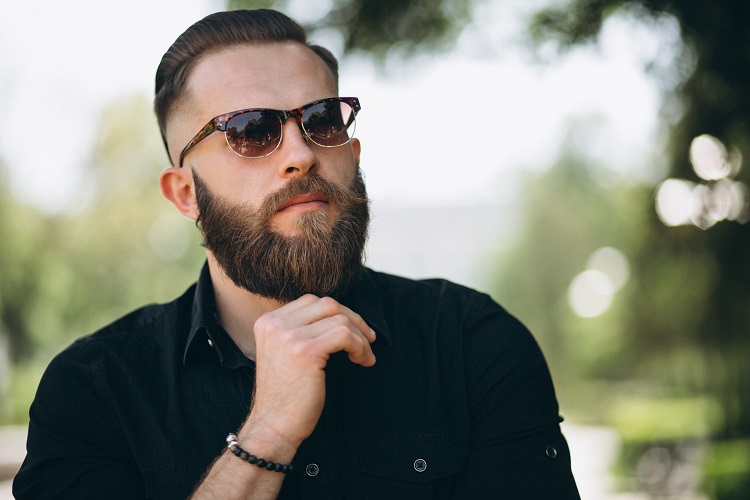
I remember the first time I asked my barber for a mid fade with beard. The haircut alone looked clean, but when he shaped the beard to match the fade line, it changed the whole look. That combination of a tapered side with a well-trimmed beard hits different.
The mid fade with beard is one of those styles that works across the board. Whether you keep your hair short on top or wear it longer with a comb over, the mid fade gives a clean transition from the temples down to the skin. Add a lined-up beard and the structure comes together.
In this post, I’m covering the best mid fade with beard styles, what face shapes they suit, and how to maintain the look.
What Is a Mid Fade with Beard?
A mid fade with beard is a men’s haircut where the fade starts at the temple area, roughly halfway between the top of the ear and the crown. The hair gradually tapers from longer on top to shorter at the sides, reaching skin level around the mid-point of the head.
The beard connects to the fade at the sideburn area. A good barber blends the fade into the beard so there’s no hard break between hair and facial hair. The transition should look continuous.
Why Is the Mid Fade with Beard So Popular?
The mid fade with beard has become one of the most requested looks in barbershops. It flatters a wide range of face shapes because the fade height sits at a neutral point on the head. It does not remove too much or too little hair from the sides.
It also pairs with almost any hairstyle on top. A textured crop, a slick back, or a buzz cut all work with a mid fade base. When the beard is lined up and blended into the sideburns, it adds definition to the jawline.
Athletes, musicians, and barbers on Instagram and TikTok have kept this style visible for years. The mid fade with beard haircut shows up across cultures and age groups, making it one of the more cross-appeal styles right now.
What Makes a Good Mid Fade with Beard?
a) The Fade Line Placement
The fade starts midway up the side of the head, roughly at the temple. A barber typically uses a #1 or #0.5 guard at the bottom and blends upward with longer guards. The transition should look smooth with no visible clipper marks between guard lengths.
b) The Beard-to-Fade Blend
A mid fade with beard blend is the most important part of this look. The sideburns must taper into the fade without a gap or a visible break. Your barber uses a detailer or open/close technique on the clipper lever to create a gradient from beard to haircut.
c) The Line Up
A mid fade with beard line up sharpens the entire look. The hairline, temples, and beard edges all get defined with a straight razor or trimmer. Clean edges around the cheeks, jawline, and neckline make the difference.
Top 8 Mid Fade with Beard Styles
The mid fade with beard works as a base for many variations.
1. Short Mid Fade with Beard
The short mid fade with beard keeps the top hair at 1 to 2 inches and pairs it with a closely trimmed beard. The short length on top means less daily styling, and the beard adds shape to the lower face. Men with thinning hair on top also benefit because the shorter length keeps proportions balanced.
2. Taper Mid Fade with Beard
The taper mid fade with beard uses a more gradual fade that does not go all the way down to skin. The taper keeps a thin layer of hair at the lowest point, giving the sides a softer appearance. Paired with a medium-length beard, this style reads as polished without being overly sharp. It suits men who prefer a less aggressive fade that still looks put together as it grows out.
3. Comb Over Mid Fade with Beard
The comb over mid fade with beard pushes the top hair to one side, creating volume and direction. The fade keeps the sides tight while the beard anchors the lower face. This combination is popular in professional settings because the comb over looks intentional and controlled. A side part adds more definition. Use a matte pomade or clay to hold the comb over in place.
4. Buzz Cut Mid Fade with Beard
The buzz cut mid fade with beard strips the top down to an even length, usually a #2 or #3 guard, and lets the beard do the heavy lifting. This is the most low-maintenance version. It requires almost no product and takes under a minute to style. Keep the neckline and cheek line sharp because the beard becomes the focal point.
5. Mid Fade with Beard for Black Men
The mid fade with beard black man variation works well with coarser, curlier hair textures. The fade looks clean on tightly coiled hair because the contrast between longer curls on top and faded sides is more visible. A line up at the forehead and temples frames the face. The beard can range from a shaped stubble to a full, squared-off look. Curl sponges on top add texture, and beard oil keeps facial hair soft along the jawline.
6. Mid Fade with Long Beard
This style pairs the mid fade with a beard that extends 2 inches or more past the chin. The longer beard creates a deliberate contrast against the tight fade on the sides. It works best on men who can grow thick, full facial hair. The beard needs regular trimming with scissors and a comb to keep its shape. Beard balm helps control the length and keeps stray hairs from spreading. This pairing suits oval and rectangular face shapes.
7. Mid Fade with Stubble
A mid fade with stubble keeps the facial hair at 1 to 3mm, just enough to add shadow and shape to the jawline. The stubble should be even across the cheeks and chin, with a clean edge along the neckline. This is a strong option for men with patchy beard growth because the short length hides thin spots.
8. Mid Fade with Beard and Hard Part
The hard part adds a shaved line into the hair, separating the top from the faded sides. Combined with a mid fade and a shaped beard, this creates a structured, geometric look. A medium-length beard with clean cheek lines completes the style. This version needs a barber visit every 2 weeks to keep the part line visible.
What Face Shape Suits a Mid Fade with Beard?
The mid fade with beard works across most face shapes, but certain variations pair better with specific structures.
- Oval faces have balanced proportions and work with nearly every mid fade with beard variation. A short beard or a comb over mid fade is a reliable choice for this face shape.
- Round faces benefit from a mid fade with a fuller beard on the chin. The vertical length pulls the face downward and adds definition.
- Square faces pair well with a taper mid fade with beard that softens the angular jawline. A slightly rounded beard shape keeps things from looking too boxy.
- Long or rectangular faces should stick with a short mid fade with beard. A shorter beard avoids adding more length, and the mid fade adds width at the temples.
- Heart-shaped faces look best with a mid fade and a fuller beard around the chin. The extra volume at the bottom offsets a wider forehead.
How to Get a Mid Fade with Beard Trim
Getting a clean mid fade with beard trim takes the right communication with your barber. Here’s how the cut is built.
- Step 1: Start with the fade. Your barber clips the sides starting with a #0 or #0.5 guard at ear level. They work upward using longer guards, blending at the mid-point of the head. The top stays untouched during this step.
- Step 2: Shape the top. Depending on the style you chose, the top gets cut with scissors or clippers. A comb over needs more length on one side, while a buzz cut gets an even guard all over.
- Step 3: Blend the sideburns into the beard. The barber uses the clipper lever in an open-to-close motion to create a smooth gradient from the fade into the beard.
- Step 4: Trim and shape the beard. The beard gets trimmed to the desired length with a guard. Cheek lines and the neckline are defined with a trimmer or straight razor.
- Step 5: Line up all edges. The hairline, temples, sideburns, and beard edges all get sharpened. A clean mid fade with beard line up at this stage is what pulls the whole cut together.
Mid Fade with Beard vs Low Fade with Beard
The main difference between a mid fade with beard and a low fade with beard is where the fade starts. A low fade begins just above the ear, keeping more hair on the sides. A mid fade starts higher, around the temple, and removes more hair for a sharper contrast.
Low fades look more conservative and grow out slower, making them a better fit for men who visit the barber every 3 to 4 weeks. Mid fades need a touch-up every 2 weeks to stay tight. For beard pairing, mid fades create a stronger frame because the contrast between the fade and the beard is more visible.
FAQs
How often should you trim a mid fade with beard?
A mid fade with beard should be trimmed every 2 weeks to keep the fade tight and the beard edges clean. The beard can be maintained at home between visits using a trimmer with an adjustable guard. The fade grows out faster than the beard, so the haircut usually needs attention first.
How do you blend a mid fade into a beard?
A barber blends a mid fade into a beard by using the clipper lever technique at the sideburn area. The lever is opened and closed while moving the clipper upward to create a smooth transition. A detailer cleans up any remaining hard lines.
What is the difference between a mid fade with beard and a taper mid fade with beard?
The difference is the lowest point of the cut. A standard mid fade goes down to skin at the bottom. A taper mid fade leaves a thin layer of hair at the lowest point, giving a softer finish. The taper version grows out more gradually and needs less frequent touch-ups.
Can you get a mid fade with beard with patchy facial hair?
Yes, a mid fade with beard works with patchy facial hair if you keep the beard at stubble level, around 1 to 3mm. The shorter length blends thin areas and still adds shape to the jawline.
Why the Mid Fade with Beard Is the Style That Works for Everyone
Since I started pairing my fade with a shaped beard, my barber visits feel less like maintenance and more like an upgrade. The mid fade with beard frames the face in a way other cuts don’t.
What I like about this style is the range. You can go minimal with a buzz cut and stubble, or go bold with a comb over and a full beard. The mid fade sits right in the sweet spot where it works for almost every setting. Explore more popular beard styles to find what pairs best with your fade.