
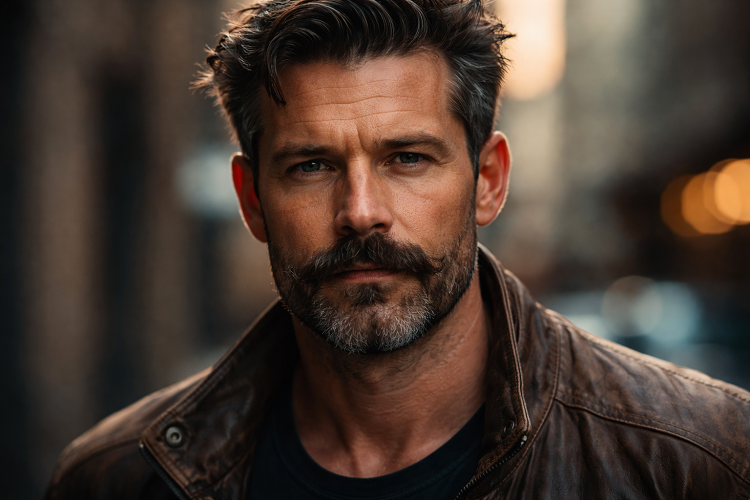
I stumbled into the beard stache by accident. I was growing a full beard and liked the way it looked when the mustache was a few weeks ahead of the rest. The stubble on the cheeks and jaw added texture, but the mustache did all the heavy lifting. I trimmed the beard back to stubble and left the mustache at full length. That was my first beard stache, and I’ve gone back to it more times than any other style.
The beard stache sits in a gap between a mustache and a full beard. It gives you the rugged look of facial hair across the face without the bulk of a full beard. The mustache is the star, and the stubble plays a supporting role. It’s one of those styles that looks effortless but actually needs a specific approach to grow and trim correctly.
In this post, I’m covering what a beard stache is, how to grow one from scratch, the best beard stache styles, how to trim and maintain it, and which face shapes it works for.
What Is a Beard Stache?
A beard stache is a facial hair style that combines a full, prominent mustache with short stubble or a closely trimmed beard on the cheeks, jaw, and chin. The mustache is the dominant feature, sitting at a noticeably longer length than the rest of the facial hair. The stubble underneath provides a shadow of coverage that frames the lower face without competing with the mustache.
The name comes from combining the words beard and mustache. The style works because it borrows from both. The stubble gives the ruggedness of a beard. The mustache gives the definition and focal point of a standalone mustache. Together, they create a look that is fuller than a bare mustache but leaner than a full beard.
Celebrities Who Wear the Beard Stache
The Henry Cavill beard stache is one of the most recognized versions of this style. Cavill has worn it across multiple press tours and social media posts, usually with a thick, well-groomed mustache and light stubble across the jaw. His version works because his mustache growth is dense and even, which gives the style its structure.
The Cbum beard stache, worn by bodybuilder Chris Bumstead, leans more rugged. His version features slightly longer stubble and a thick mustache that fits his larger frame. The Gordon Hayward beard stache sits somewhere in between, with a clean stubble and a neat mustache that keeps the look sharp for an athlete in the public eye.
Other men who have worn versions of the beard stache include Tom Hardy, Idris Elba, and Jake Gyllenhaal. Each brings a slightly different take depending on face shape, mustache thickness, and stubble length. The common thread is a mustache that clearly leads the look.
How to Grow a Beard Stache
Growing a beard stache takes 4 to 6 weeks if you are starting from clean-shaven. The mustache needs more time than the rest of the face because it has to reach a visibly longer length than the stubble. Here is the process broken down week by week.
Weeks 1–2: Let Everything Grow
Do not trim anything for the first two weeks. Let the mustache, cheeks, chin, and jawline grow freely. The goal is to build enough length on the mustache before you start shaping. The rest of the face will look like a normal short beard at this stage. Resist the urge to clean up or shape anything yet.
Weeks 3–4: Trim the Stubble, Leave the Mustache
After 3 weeks, the mustache should have enough length to sit above the lip and start showing weight. Now trim the cheeks, jawline, and chin down to stubble length using a trimmer set to 2 to 4mm. Leave the mustache completely untouched. This is the moment the beard stache shape starts to appear. The contrast between the full mustache and the short stubble is what creates the look.
Weeks 5–6: Shape and Refine
By week 5 or 6, the mustache should have enough density and length to be properly shaped. Use a small pair of grooming scissors to trim any hairs that hang over the lip or sit unevenly. Comb the mustache outward from the center to train the hairs to the sides. Continue trimming the stubble to your chosen guard length every 3 to 5 days. The beard stache is now fully formed.
Best Beard Stache Styles
Beard stache styles vary based on stubble length, mustache thickness, and how the two are blended together. Here are the most common variations.
1. Stubble Beard Stache
The stubble beard stache is the classic version. The mustache sits at full length while the rest of the face is trimmed to 2 to 3mm of stubble. The contrast between the thick mustache and the light stubble is sharp and clean. This is the version most people picture when they hear the term beard stache. It works for almost every face shape and is the easiest to maintain.
2. Short Beard Stache
The short beard stache keeps the lower facial hair slightly longer than stubble, around 5 to 8mm. The mustache is still the dominant feature, but the beard underneath has more presence. This version works for men who find pure stubble too sparse or who want a bit more coverage on the cheeks and chin. The transition from mustache to beard is softer than the stubble version.
3. Hipster Beard Stache
The hipster beard stache features a longer, styled mustache with the ends curled or waxed outward. The stubble underneath stays short, but the mustache has personality. Mustache wax is needed to hold the shape throughout the day. This style suits men who want the beard stache to be a statement piece rather than a subtle look. It pairs well with longer hair on top or a slicked-back style.
4. Patchy Beard Stache
A patchy beard stache works for men who can grow a full mustache but have uneven growth on the cheeks or jawline. Keeping the stubble at 1 to 3mm hides the gaps and gives the appearance of even coverage. The mustache does the visual work, so the patchiness on the rest of the face becomes a textural detail rather than a flaw. Many men find the beard stache is the first facial hair style that actually works with their patchy growth.
5. Bald with Beard Stache
A bald head with beard stache puts all the attention on the facial hair. The clean scalp and the full mustache create a strong contrast that looks bold and deliberate. The stubble on the jaw and chin adds just enough shadow to fill the lower face. This combination has a tough, masculine appearance and works especially well on men with strong brow ridges and defined jaw structures.
6. Beard Stache with Fade
Pairing a beard stache with a fade haircut creates a sharp, modern look. The faded sides of the haircut mirror the gradual transition between the mustache and the stubble on the face. A mid or low fade works best because it keeps the sideburns short enough to blend into the beard stache stubble. This is one of the most popular beard stache styles for younger men and works across casual and professional settings.
7. Beard Stache with Undercut
An undercut with a beard stache creates strong contrast between the disconnected hair on top and the clean stubble on the face. The mustache bridges the gap between the sharp haircut and the minimal facial hair. This pairing works for men who want a structured, high-contrast look. Keep the stubble at 2 to 3mm and the mustache at full density for the best result.
How to Style and Trim a Beard Stache
Once the beard stache is grown in, the key is maintaining the length difference between the mustache and the stubble. Here is a step-by-step trimming routine.
- Step 1: Set your trimmer to 2 to 4mm. Run it across the cheeks, jawline, chin, and neck to bring the stubble down to an even length. Work with the grain to avoid irritation.
- Step 2: Switch to a naked blade or 0.5mm guard for the neckline. Define the neckline by trimming below the Adam’s apple and creating a clean edge. A sloppy neckline makes the whole beard stache look unfinished.
- Step 3: Leave the mustache alone with the trimmer. Do not run the guard over the mustache. The mustache stays at its natural grown-out length. Only use scissors for any cleanup.
- Step 4: Use grooming scissors on the lip line. Trim any mustache hairs that hang over the upper lip. Small, precise cuts keep the lip line clean without shortening the overall mustache length.
- Step 5: Comb the mustache outward from the center. Use a fine-tooth comb or a small mustache comb to train the hairs to sit outward toward the corners of the mouth. This adds width and shape.
- Step 6: Apply mustache wax for hold. A small amount of mustache wax keeps the hairs in place throughout the day. Warm it between your fingers and work it into the mustache from center to tips.
- Step 7: Apply beard oil to the stubble. A few drops of beard oil rubbed into the stubble keeps the skin underneath moisturized and reduces itchiness. This is especially important in the first few weeks when the stubble is still growing in.
What Face Shape Suits a Beard Stache?
The beard stache works across most face shapes because the mustache adds a horizontal focal point while the stubble adds subtle definition to the jaw.
- Oval faces suit every beard stache variation. The balanced proportions mean no adjustments are needed.
- Round faces benefit from a beard stache because the mustache adds a horizontal line across the center of the face, which visually breaks up the roundness. Keep the stubble shorter on the sides to avoid adding width.
- Square faces pair well with a stubble beard stache. The soft stubble rounds out the angular jaw, and the mustache adds character without sharpening the face further.
- Long faces should keep the mustache wide and the stubble at a minimal length. The width of the mustache adds a horizontal element that shortens the visual length of the face.
- Heart-shaped faces work well with a short beard stache. The stubble at the chin adds weight to the narrower lower face, and the mustache draws the eye to the center.
Beard Stache vs Full Beard vs Goatee
The beard stache sits between a full beard and a goatee in terms of coverage and maintenance. A full beard requires even growth across the cheeks, jaw, and chin, plus regular shaping to keep it looking clean. A goatee isolates the facial hair to the chin and lip area, leaving the cheeks bare. The beard stache covers the full face with stubble but puts the emphasis on the mustache.
In terms of maintenance, the beard stache is easier than a full beard because the stubble only needs a quick pass with a trimmer every few days. It is slightly more work than a goatee because the mustache requires shaping and the stubble covers a larger area. Men who find a full beard too heavy or a goatee too bare often land on the beard stache as the middle ground.
FAQs
How long does it take to grow a beard stache?
A beard stache takes 4 to 6 weeks to grow from clean-shaven. The mustache needs at least 3 to 4 weeks of uninterrupted growth before it reaches the length needed to stand out against the trimmed stubble. Men with faster facial hair growth may see results closer to 3 weeks.
What length should the stubble be for a beard stache?
The stubble on a beard stache is typically kept at 2 to 4mm. This length gives enough shadow and texture to frame the face without competing with the mustache. Some men go as high as 5 to 8mm for a short beard stache, but the mustache should always be visibly longer.
Can you grow a beard stache with patchy facial hair?
Yes, a patchy beard stache works as long as the mustache grows in full. Keeping the stubble at 1 to 3mm hides patches on the cheeks and jaw. The mustache carries the style, so uneven growth on the rest of the face is less noticeable than with a full beard.
What is the Henry Cavill beard stache?
The Henry Cavill beard stache features a thick, dense mustache with clean, short stubble on the cheeks and jaw. Cavill keeps his version well-groomed with sharp edges and a defined neckline. His mustache is full enough to stand out on its own, and the stubble adds just enough facial hair to ground the look.
Is a beard stache professional?
Yes, a beard stache is suitable for professional settings when it is well-trimmed. A stubble beard stache with clean edges and a defined neckline looks polished in office environments. The style reads as intentional and groomed, not messy. Avoid the hipster version with waxed mustache tips in formal workplaces.
How often should I trim a beard stache?
The stubble should be trimmed every 3 to 5 days to maintain an even length. The mustache only needs trimming along the lip line every 7 to 10 days using grooming scissors. The neckline should be cleaned up at the same time as the stubble.
What is the difference between a beard stache and a chevron mustache?
A chevron mustache is a standalone mustache with no facial hair on the cheeks, jaw, or chin. A beard stache adds stubble or a short beard underneath the mustache. The stubble is what separates the two styles. The beard stache has coverage across the full face, while the chevron is mustache only.
Does a beard stache work on a bald head?
Yes, a bald head with beard stache is one of the strongest versions of this style. The bare scalp shifts all the visual focus to the face, and the full mustache becomes the central feature. The stubble fills in the jaw and chin for balance. This combination looks bold and deliberate.
What products do I need for a beard stache?
A beard stache needs a quality trimmer with adjustable guards for the stubble, grooming scissors for the mustache lip line, mustache wax for hold and shape, and beard oil for the stubble and skin underneath. A small mustache comb helps train the hairs to sit in the right direction.
Can I grow a beard stache if my mustache is thin?
A thin mustache makes the beard stache harder to pull off because the style depends on the mustache being the dominant feature. If your mustache is thin, try growing it for a full 6 weeks before trimming the stubble to see if the density fills in. If it remains sparse, a full stubble or short beard may suit you better.
What hairstyle goes best with a beard stache?
A fade, undercut, or textured crop all pair well with a beard stache. The clean sides of these haircuts match the trimmed stubble on the face, and the volume on top balances the weight of the mustache. A slick back also works for a more polished look.
Is a beard stache the same as a Van Dyke?
No. A Van Dyke combines a mustache with a pointed goatee on the chin, with the cheeks shaved clean. A beard stache keeps stubble across the entire face, including the cheeks and jawline. The Van Dyke isolates the facial hair to two areas, while the beard stache covers the full lower face.
Why the Beard Stache Is the Style Worth Committing To
The beard stache is one of those styles that looks like you woke up with it, but it actually takes intention to grow and maintain. The 4 to 6 weeks of growth, the regular stubble trims, the mustache shaping. All of that is what separates a beard stache from a guy who just forgot to shave evenly.
Pick the variation that matches your mustache density and face shape, commit to the growing phase, and keep the stubble in check. Once the mustache reaches its full length and the stubble is dialed in, the beard stache holds itself together with minimal daily effort. Explore more popular beard styles to see how the beard stache compares.

I’m a regular guy who got way too into beard care and started writing it all down. Everything here comes from my own experience with my own beard, not from a brand brief.