
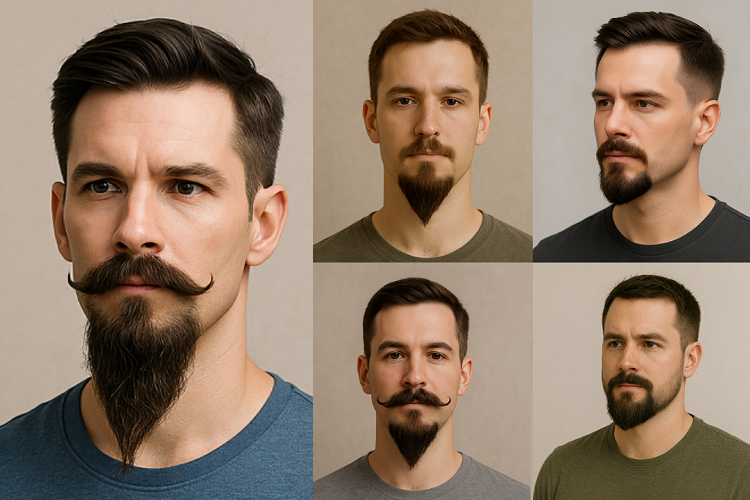
Bold, sharp, and effortlessly stylish, the Van Dyke beard has come roaring back into modern grooming. Once worn by 17th century aristocrats and painters, it now turns up on athletes, actors, and anyone who wants a look with real character.
The appeal is simple. Clean-shaven cheeks, a sculpted goatee, and a separate mustache give you a striking, artistic shape without the commitment of a full beard.
If you are tired of the full-beard crowd, this popular beard style is a sharp alternative that adds shape to your jawline. Across all the beard styles for men, few looks feel as deliberate or as timeless.
I have worn a Van Dyke on and off for years, and it is still the style people ask me about most. Below I break down what it actually is, how it compares to the goatee and anchor beard, 16 variations to try, and exactly how to trim one yourself.
What Is a Van Dyke Beard?
A Van Dyke beard is a pointed or rounded goatee paired with a separate, detached mustache, with the cheeks and jawline shaved completely clean. The gap between the mustache and the chin is the whole point, since that separation is what gives the style its sharp, sculptural contrast.
The look is named after the 17th century Flemish painter Anthony van Dyck, who wore it and painted it on many of his subjects, including King Charles I of England. For that reason it is sometimes nicknamed a Charlie, and in some places it is called a French beard.
You will also see it spelled Vandyke or Van Dyck, but they all describe the same shape. Because the cheeks stay bare, it shifts all the attention to your upper lip and chin, which makes it a great option even if your cheek growth is patchy.
Van Dyke Beard vs Goatee
A Van Dyke is technically a type of goatee, but with key differences in structure and intent. A goatee can be casual and minimal, while a Van Dyke is deliberate, styled, and expressive.
The biggest distinction is the mustache. A plain goatee often skips it or lets it connect, while a Van Dyke always keeps a distinct, standalone mustache above a shaped chin beard.
| Feature | Van Dyke Beard | Goatee |
|---|---|---|
| Mustache | Always included and detached | Often skipped or connected |
| Cheeks | Always clean-shaven | Clean or light stubble |
| Chin shape | Sculpted, pointed or rounded | Simple chin tuft |
| Overall vibe | Styled, vintage, expressive | Casual, minimal, flexible |
| Upkeep | Higher, needs precise lines | Lower |
Anchor Beard vs Van Dyke Beard
These two get confused constantly, but the difference is easy to spot once you know it. An anchor beard connects to the chin and runs a thin strip along the jawline, while a Van Dyke is completely disconnected with bare cheeks and a bare jaw.
The anchor gets its name from its anchor-like outline around the lower face, the same shape behind the Tony Stark beard. The Van Dyke, by contrast, keeps the mustache floating separately for a more artistic, vintage feel.
| Feature | Van Dyke Beard | Anchor Beard |
|---|---|---|
| Mustache | Detached from the chin | Connected to the chin |
| Jawline | Shaved clean, no strip | Thin strip follows the jaw |
| Connection | Fully disconnected | Connected outline |
| Shape | Goatee plus floating mustache | Ship-anchor outline |
| Look | Artistic and vintage | Structured and graphic |
16 Van Dyke Beard Styles to Try This Year
The Van Dyke is endlessly adjustable, which is why it has lasted for centuries. Here are 16 variations, from the strict classic to bolder modern takes, so you can find the one that fits your face and your routine.
1. Classic Van Dyke
The original look is a pointed goatee with a cleanly detached mustache and bare cheeks. The mustache is often given a slight curl at the tips, exactly the way it appears in van Dyck’s own portraits.
This is the version barbers picture first when you say Van Dyke. Get this one right and every other variation becomes easy.
Best for: oval and square faces, and anyone wanting the timeless, textbook version.
2. Modern Van Dyke
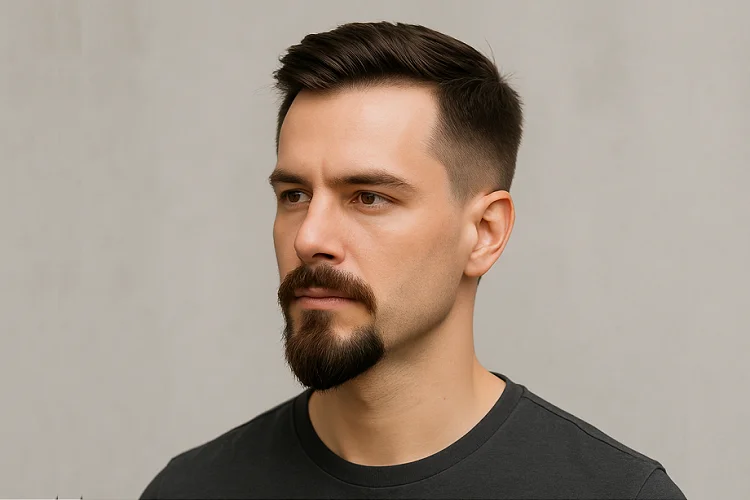
The modern Van Dyke strips out the ornamentation for crisper, tapered lines. It keeps the goatee-and-mustache combo but reads cleaner and sharper.
It is simple to maintain with a precision trimmer and works in both formal and casual settings.
Best for: professionals who want a low-fuss, contemporary version.
3. Short Van Dyke
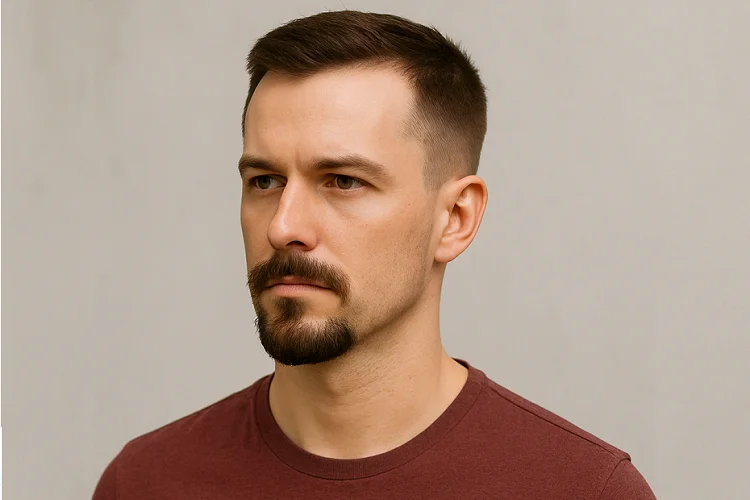
Trimmed tight and close to the skin, the short Van Dyke keeps the iconic shape with almost no length. It is the lowest-maintenance way to wear the style.
It suits finer facial hair and anyone who prefers a neater finish, much like other short beard styles.
Best for: finer hair, hot climates, and a clean, conservative look.
4. Long Van Dyke
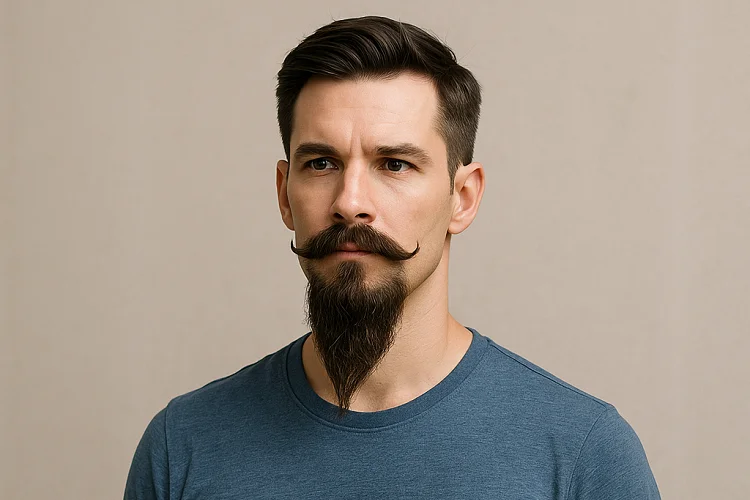
The long version features an extended, dramatic goatee with a detached mustache. Letting the chin grow out before shaping gives the face length and real flare.
It works beautifully on fuller jawlines and sits comfortably among bolder long beard styles.
Best for: fuller jawlines and men who want a statement length.
5. Pointed (Sharp) Van Dyke
Here the chin beard tapers to a single, distinct point at the bottom of the chin. The sharp apex elongates the face and adds serious chin projection.
Keep the cheeks bare for maximum contrast so the point reads as cleanly as possible.
Best for: round faces that want more length and angle.
6. Rounded Van Dyke
Instead of a sharp point, the chin tuft is softened into a rounded shape. It is a gentler, less severe take that still keeps the detached mustache and clean cheeks.
The rounded chin balances strong, angular jaws without losing the Van Dyke structure.
Best for: square and angular faces that want a softer finish.
7. Van Dyke with Stubble
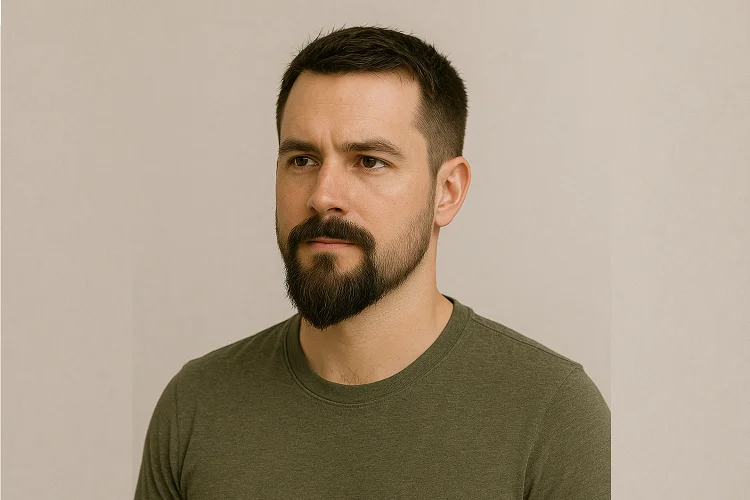
A defined goatee and mustache are paired with light stubble across the cheeks and jaw. The contrast creates a rugged yet stylish, lived-in finish.
It is forgiving to grow and pairs well with other stubble beard styles if you like a slightly edgier look.
Best for: a relaxed, low-effort spin on the classic.
8. Van Dyke Full Beard
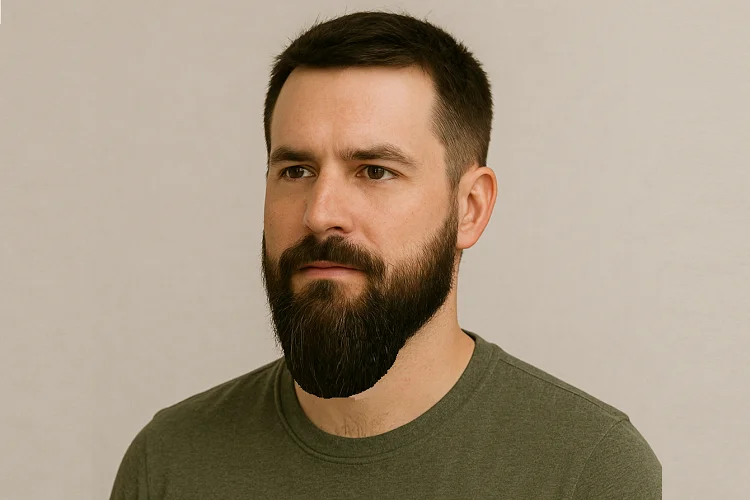
This take merges the goatee and mustache with fuller growth along the jaw, sometimes called a French beard. It softens the high contrast while still keeping clear structure.
It is ideal for men transitioning from full beard styles who still want the Van Dyke lines.
Best for: those moving down from a full beard who want a bolder, approachable look.
9. Van Dyke Under Chin (Extended)
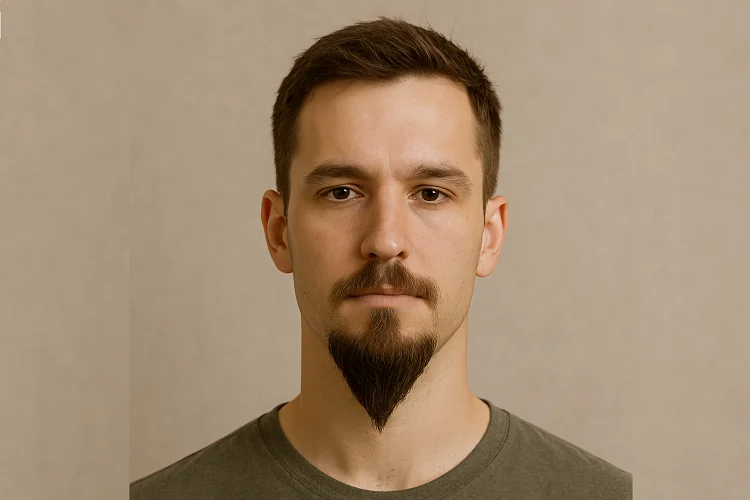
The extended version drops the goatee below the jawline for more length and volume under the chin. It elongates the face and adds a subtle twist to the standard shape.
It gives you extra definition without committing to a full beard.
Best for: rounder faces that want more vertical length.
10. Van Dyke with Soul Patch
Adding a soul patch under the lower lip fills the gap between mustache and chin. It is one of the oldest documented Van Dyke variants, the soul-patch version.
The extra tuft adds fullness in the centre for men who find the standard look too sparse there.
Best for: filling out a thin centre and adding subtle character.
11. Van Dyke with Handlebar Mustache
Pair the goatee with a %s curled upward at the tips for serious old-world character. The mustache becomes the centrepiece while the chin anchors the shape.
It needs a little wax to hold the curl, but the payoff is a striking, vintage statement.
Best for: confident dressers who want maximum personality.
12. Corporate Van Dyke
A tidy, conservative version trimmed short and symmetrical for professional settings. The lines stay subtle and the length stays controlled.
It reads polished in the boardroom while still giving your face structure and definition.
Best for: office environments and a refined, understated look.
13. Salt-and-Pepper Van Dyke
The Van Dyke looks especially distinguished in grey or salt-and-pepper tones. The defined shape frames mature features and adds a touch of authority.
There is no need to hide the grey here, since the contrast only sharpens the outline.
Best for: mature men who want an elegant, dignified style.
14. Faded Van Dyke
A modern, barber-driven take that fades the goatee or sideburns into the hairline. It pairs well with a fresh haircut or a bald head for a sleek, current look.
The fade adds gradient and edge, a bit like a beard fade applied to the lower face.
Best for: trend-forward men and clean, short hairstyles.
15. Mustache-Forward Van Dyke
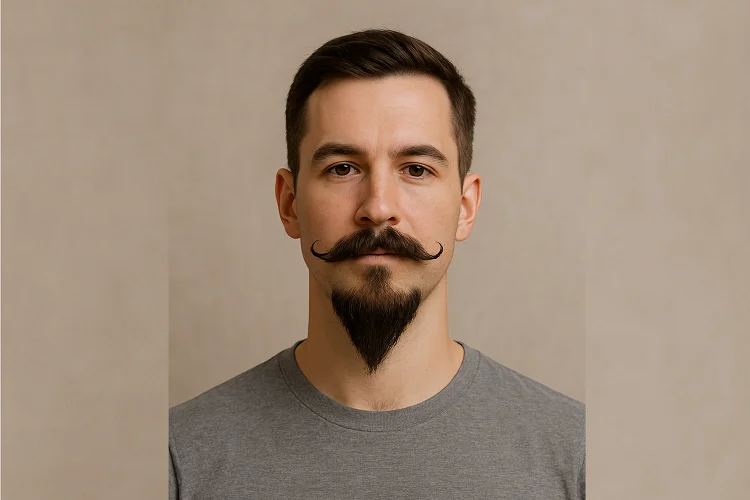
This bold variation lets the mustache take centre stage, grown thicker and more expressive above a tidy goatee. It is the rebellious, rock-inspired end of the Van Dyke family.
It is all about individuality, so groom the mustache deliberately and let it lead.
Best for: strong mustache growth and an expressive, standout look.
16. Van Dyke Without Mustache
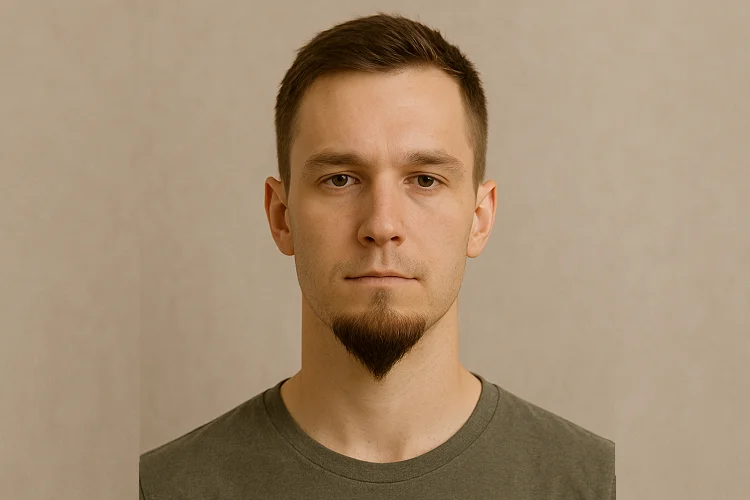
Dropping the mustache entirely streamlines the look down to the sculpted goatee. Purists will argue this is really a goatee, but it keeps the Van Dyke’s clean cheeks and shaped chin.
It is a smart workaround for patchy mustache growth or anyone who prefers a clean top lip.
Best for: patchy mustache growth and a minimal finish.
Which Face Shape Suits a Van Dyke Beard?
One of the best things about the Van Dyke is how many face shapes it flatters. The clean cheeks and focused chin add length and structure almost universally.
- Oval faces: the most flexible canvas. You can pull off nearly any Van Dyke variation, especially with a fuller mustache.
- Square faces: a pointed or rounded goatee softens a strong jaw while keeping the masculinity intact.
- Round faces: a taller, narrower Van Dyke adds length and angles, making the face look longer and leaner.
- Heart or triangular faces: the downward focus balances a wider forehead and draws attention to the chin.
- Oblong or long faces: go shorter and avoid extra chin length, since a long pointed goatee can stretch the face further.
How to Trim a Van Dyke Beard
Maintaining a Van Dyke means trimming your beard on a regular schedule. The shape blurs quickly, so consistency is what keeps it looking sharp.
- Let it grow first. Give your upper lip and chin two to four weeks to grow in fully so you have enough length to shape.
- Shave the cheeks and jaw. Remove all cheek and jawline hair with a razor or trimmer, leaving only the mustache and chin.
- Shape the chin beard. Trim the chin into a clean point or a rounded form, depending on the variation you want.
- Define the mustache. Keep the mustache fully separated from the chin and avoid connecting them at the corners. Trim it smoothly and evenly.
- Maintain regularly. Do light touch-ups every two to three days and a closer trim weekly to hold the separation and symmetry.
A precision tool makes or breaks this look. See our tested picks for the best beard trimmers for men, and finish with beard butter or beard oil to keep the hair soft and healthy.
Make the Van Dyke Beard Your Signature Style
The Van Dyke is more than facial hair. It is a timeless mix of structure and creativity that has framed faces from royal portraits to red carpets.
Whether you wear it long, modern, faded, or sharply pointed with a curled mustache, there is a variation here for your face and your attitude. Keep the lines clean, stay on top of the trimming, and a daily beard oil will keep the shape looking its best between cuts.
FAQs
What is a Van Dyke beard?
A Van Dyke beard is a pointed or rounded goatee paired with a separate, detached mustache, with the cheeks and jawline shaved completely clean. The deliberate gap between the mustache and chin is what gives the style its sharp, artistic contrast.
What is the difference between a Van Dyke and a goatee?
A Van Dyke is a more deliberate, styled type of goatee. A plain goatee is often just chin hair and may skip the mustache, while a Van Dyke always includes a distinct, standalone mustache above a shaped chin beard with clean cheeks.
What is the difference between a Van Dyke and an anchor beard?
The anchor beard connects to the chin and runs a thin strip along the jawline, forming an anchor-like outline. A Van Dyke is completely disconnected, with bare cheeks and a bare jaw, keeping the mustache floating separately from the chin.
How is a Van Dyke different from a Balbo beard?
Both have a detached mustache, but a Balbo features a chin patch or strap and often a soul patch, without the pointed goatee extension. A Van Dyke keeps a sculpted, usually pointed goatee, giving it a sharper, more vintage shape.
What face shape suits a Van Dyke beard?
Van Dyke beards flatter round, square, oval, and heart-shaped faces because the clean cheeks and focused chin add length and structure. Men with long or oblong faces should keep the goatee shorter to avoid stretching the face further.
Why is it called a Van Dyke beard?
It is named after the 17th century Flemish painter Anthony van Dyck, who wore the style and painted it on many of his subjects, including King Charles I. The pairing of a pointed goatee and styled mustache became known as the Van Dyke.
What is a Van Dyke beard also called?
It is sometimes nicknamed a Charlie, after King Charles I of England, and in some places it is referred to as a French beard. You will also see the spellings Vandyke and Van Dyck for the same shape.
How long does it take to grow a Van Dyke beard?
Most men can grow enough mustache and chin hair to shape a Van Dyke in two to four weeks. The exact time depends on how quickly and densely your upper lip and chin fill in.
How do you style a Van Dyke beard?
Shave the cheeks and jawline clean, then trim the chin into a rounded or pointed goatee. Keep the mustache unconnected and shaped to match, use beard oil or balm for smoothness, and add a little wax if you want to curl the mustache tips.
Can you have a Van Dyke beard without a mustache?
Yes, though purists consider that a goatee rather than a true Van Dyke. It still keeps the clean cheeks and sculpted chin, which makes it a good option for men with patchy mustache growth or a preference for a clean top lip.
Does a Van Dyke beard work with patchy growth?
It often does. Because the cheeks stay completely clean, the style hides patchy cheek growth and shifts attention to the upper lip and chin, where most men grow hair more reliably.
Can you wear a Van Dyke with stubble?
Yes. A Van Dyke works with light stubble as long as the mustache and chin stay clearly defined and the separation between them remains visible.
How often should you trim a Van Dyke beard?
Do light touch-ups every two to three days and a more detailed trim about once a week. Regular trimming keeps the separation crisp, maintains symmetry, and stops the style from blending into a plain goatee.
Are Van Dyke beards attractive?
Many men find the Van Dyke attractive because it adds definition and creates a sharp, confident look. Its clean lines and vintage refinement give the face structure without the bulk of a full beard.

I’m a regular guy who got way too into beard care and started writing it all down. Everything here comes from my own experience with my own beard, not from a brand brief.