
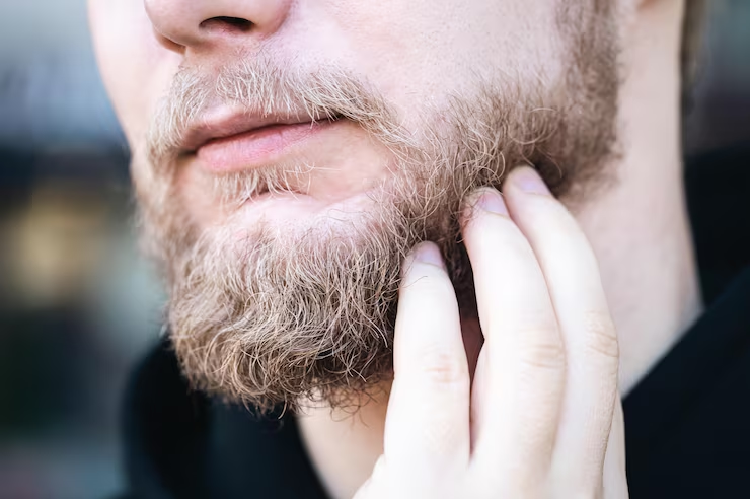
Growing a beard is mostly a matter of patience and letting your genetics do their work, but there are real things that help and a lot of marketing that does not. Knowing the difference saves you money and disappointment.
The honest starting point is that no product can push your beard past its genetic ceiling. What you can do is reach that ceiling by growing through the awkward stage, keeping the skin and follicles healthy, and giving it time.
This guide answers the real questions in order: how long it takes, the stages you pass through, why beards go patchy, and what actually supports growth. Where a topic touches health, we cite the evidence and say plainly what is proven and what is not.
To grow a beard, stop shaving and let it grow for at least four to six weeks through the itchy, patchy awkward stage, keep the skin healthy with washing and oil, and support it with good sleep, exercise, and a balanced diet. You cannot exceed your genetic potential, but most men do not reach it because they give up too early.
- ⏳ Be patient: commit to four to six weeks before judging your beard
- 🧴 Care for the skin: wash, moisturise, and use beard oil to beat the itch
- 💪 Support it: sleep, exercise, and a diet with enough protein and key vitamins
- 🧬 Accept the ceiling: genetics set the limit, so work with the beard you have
- Beard Growth Stages and Timeline
- How to Grow a Beard Faster and Fuller
- Does Shaving Make It Grow Faster?
- Genetics, Ethnicity, and Beard Growth
- Testosterone, DHT, and Beard Growth
- Does Minoxidil Work for Beards?
- Supplements and Vitamins
- Diet and Nutrition
- Sleep, Stress, and Exercise
- Do Beard Growth Products Work?
- How to Fix a Patchy Beard
- Growing a Beard at Any Age
- Caring for a Beard While It Grows
- Frequently Asked Questions
- References
Beard Growth Stages and Timeline
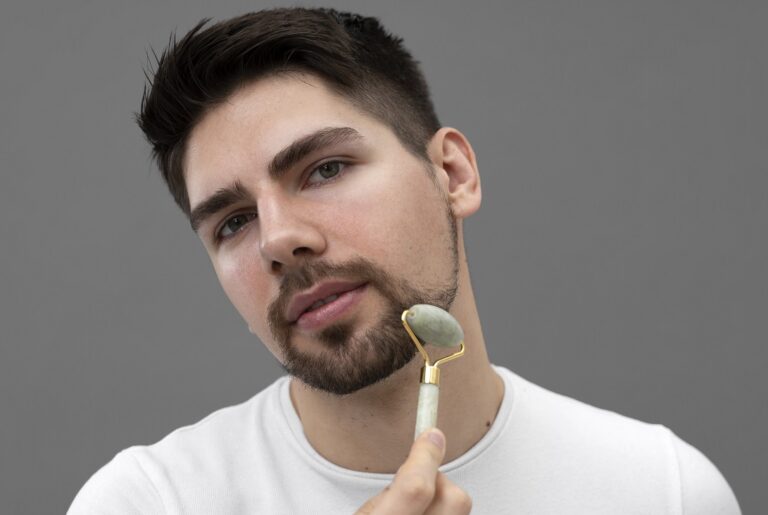
A beard grows about half an inch, or roughly 1.25 centimeters, a month on average, though the exact rate varies from man to man. A short full beard usually takes two to four months, and a longer, fuller beard takes six months or more.
Growth happens in stages, and knowing which one you are in helps you resist the urge to give up. Find yourself in the stages below.
Stubble (week 1 to 2). The first growth comes in as stubble across the cheeks, chin, and upper lip. This stage is easy, and the beard looks even because the hairs are all short.
The awkward stage (week 2 to 6). This is where most men quit. The beard looks patchy and uneven, the skin underneath itches, and it can feel scruffy rather than intentional.
Push through it. The patchiness at this stage is mostly hairs growing at different speeds, not your final coverage. Oil and a gentle wash handle the itch.
Filling in (week 6 to 12). Slower-growing areas catch up, the beard gains weight, and the shape starts to appear. The itch usually fades as the hair softens and lengthens.
This is when you can start lightly shaping the neckline and cheek line, while leaving the length alone.
Full beard (3 to 6 months and beyond). By now the beard has real density and length, and you can trim and style it into a defined shape. Longer styles keep developing well past the six-month mark.
How long does it take to grow a full beard?
A full beard takes most men two to four months to reach a short, complete length, and six months or more for a longer, denser look. Because hair grows about half an inch a month, the timeline is largely fixed, so the main variable is how long you are willing to grow.
How to Grow a Beard Faster and Fuller
You cannot make a beard grow faster than your genetics allow, but you can remove the things that hold it back and give it the healthiest conditions to fill in. The single most effective step is simply not shaving and letting it grow.
Beyond patience, the levers that genuinely help are general health ones: enough sleep, regular exercise, a balanced diet, and lower stress all support healthy hair growth. Keeping the skin clean and moisturised lets follicles do their job without irritation.
To make a thinner beard look fuller while it develops, grow it slightly longer so denser areas fall over sparse spots, brush it to fan the hairs, and keep the lines sharp. These thin beard hacks help a sparse beard read as fuller.
Does Shaving Make Your Beard Grow Faster?
No. Shaving does not make your beard grow back faster, thicker, or darker. This is one of the most common beard myths, and it is wrong.
So shaving your patchy areas will not encourage them to fill in. If anything, constant shaving just resets your progress and keeps you stuck in the stubble stage.
Genetics, Ethnicity, and Beard Growth
Genetics is the single biggest factor in how much beard you can grow. Your genes decide how many facial hair follicles you have and how sensitive they are to the hormones that drive beard growth, which together set your beard’s potential.
Ethnicity plays into this too. Men of Mediterranean, Middle Eastern, and South Asian descent often grow denser beards, while many East Asian men grow lighter ones, though there is wide variation within every group.
You cannot change your genetics, so if a full beard is not in your DNA, the smart move is to work with what you have. Our guide to beard styles for black men covers shaping textured and varied growth to its best effect.
Testosterone, DHT, and Beard Growth
Facial hair is driven by androgens, mainly dihydrotestosterone, or DHT, which the body makes from testosterone. That is the hormone most responsible for beard growth.
But having more testosterone does not mean a bigger beard. Most men sit within a similar testosterone range, and beard fullness depends far more on how sensitive your hair follicles are to these hormones, which is set by genetics.
This is why a patchy beard is usually not a testosterone problem. Testosterone boosters and similar products will not fill in a patchy beard in a man with normal hormone levels, and low testosterone is a medical issue worth discussing with a doctor rather than self-treating.
Does Minoxidil Work for Beard Growth?
Minoxidil shows some real but limited evidence for beards. In a randomised, placebo-controlled trial, men who applied a 3% minoxidil lotion twice a day grew measurably more facial hair over 16 weeks than men using a placebo.[1]
That said, the evidence base is small. It rests largely on that one study plus a growing body of newer research, so reviews describe minoxidil for facial hair as promising but not settled. It is used off-label for beards, meaning it is not officially approved for this purpose.
Minoxidil can also cause side effects such as skin irritation, dryness, and redness, and results vary widely between individuals, with no reliable figure for how many men see a meaningful change. Because it is a medication, talk to a doctor or dermatologist before trying it, and be sceptical of any article promising a guaranteed result.
Beard Growth Supplements and Vitamins
Biotin and dedicated beard growth vitamins do not grow a beard unless you are genuinely deficient, and deficiency is rare in anyone eating a balanced diet. A review of the research found that biotin only improved hair in people with an underlying deficiency or medical condition, with no benefit shown in otherwise healthy individuals.[2]
Biotin deficiency is uncommon precisely because the body needs only a small amount, which a normal diet easily supplies.[4] The same logic applies to most heavily marketed beard growth pills: they help only if they are correcting a real shortfall, not as a general booster.
The honest takeaway is to save your money on supplements unless a blood test shows you are actually low in something. If you suspect a deficiency, a doctor can test for it and advise properly.
Diet and Nutrition for Beard Growth
A balanced diet supports beard growth, but only by preventing deficiencies rather than by supercharging it. Nutrients such as zinc, vitamin D, iron, and B vitamins all play a role in healthy hair, yet taking more than your body needs does not add growth.[3]
Protein matters because hair is made largely of a protein called keratin, so getting enough is sensible. Whole foods like eggs, lean meat, fish, nuts, leafy greens, and beans cover the nutrients that support hair far better than any pill.
In short, eat well and you give your beard everything it needs from the inside. A poor diet can hold growth back, but a good one will not push it past your genetic ceiling.
Sleep, Stress, and Exercise
Beard growth is a reflection of your overall health, so the habits that keep you healthy also give your beard the best conditions. Poor sleep, high stress, and inactivity can all work against healthy hair.
Sleep is when the body repairs and regulates its hormones, so consistent, quality sleep supports growth indirectly. Chronic stress can disrupt that balance and, in some cases, contribute to hair shedding, so managing it helps.
Regular exercise improves circulation and general health, both of which support healthy follicles. The effect of exercise on beard growth specifically is modest, so treat these habits as removing obstacles rather than as a growth trick.
Do Beard Growth Products Actually Work?
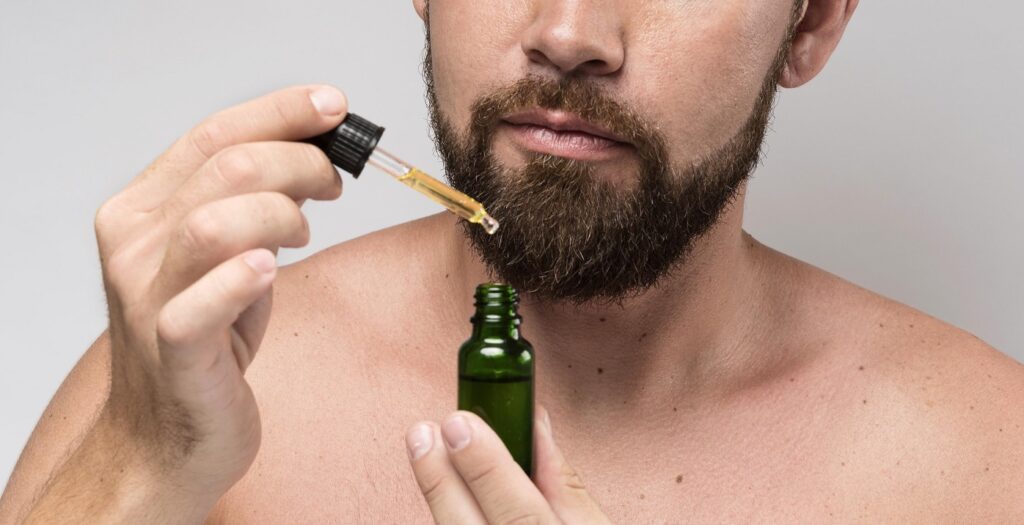
Most beard growth products support the beard you can already grow rather than creating new growth, and only a couple have real evidence behind them. Here is the honest breakdown of what works.
Beard oil does not grow hair, but it keeps the skin and follicles healthy, calms itch, and softens the beard so it looks its best while it fills in. A derma roller has some evidence for stimulating the skin and is a low-risk option many men add to their routine.
See our guide to beard oil for growth and how to use a derma roller for your beard. Of the medical options, minoxidil has the strongest clinical support, while most serums, pills, and vitamins do little unless you are correcting a real deficiency.
Beard oil vs balm for growth
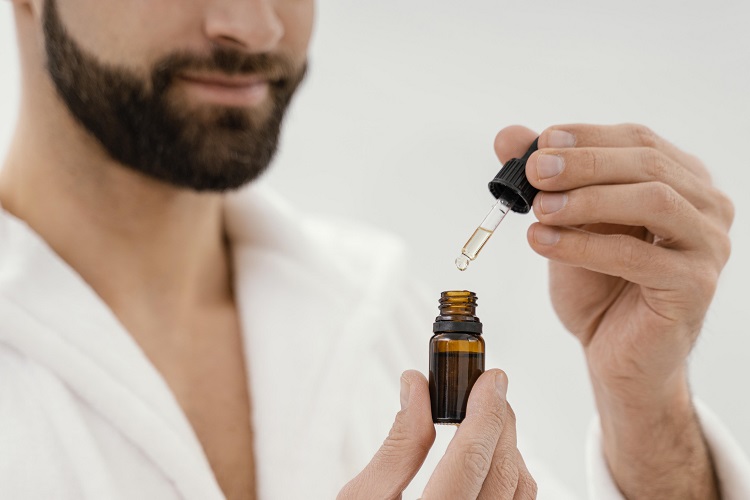
Neither oil nor balm grows a beard, but oil is the better choice while growing one because it reaches the skin and follicles, where balm mainly conditions and holds the hair. Use oil daily from the early stages, and add a balm later for shape once the beard has length.
Compare options in our roundups of the best beard oils and the best beard balms.
How to Fix a Patchy Beard
To fix a patchy beard, grow it longer so denser areas fall over the sparse spots, style around the gaps rather than fighting them, and give it time, since many patchy beards fill in with age. Patience and smart shaping do more than any product.
Much patchiness is temporary and simply reflects hairs growing at different rates, so a beard that looks thin at three weeks often connects by three months. Where a gap is genuine, keeping the beard slightly longer and brushing the hair across the gap disguises it well.
For the shapes that work best with uneven growth, and for connecting the beard to the mustache, see our guide to patchy beard styles. If patchiness really bothers you, minoxidil is the option with the most evidence, discussed above, and worth raising with a dermatologist.
Growing a Beard at Any Age
Beard growth develops through and after puberty, and many men do not reach their fullest beard until their late twenties or early thirties. So a thin or patchy beard at a younger age is normal and often improves with time.
If you are a teenager, the honest answer is to be patient, since your beard is still developing and no product safely speeds that up. Focus on general health, and avoid adult growth medications, which are not appropriate for young teens without medical advice.
The good news for older men is that beards can continue to fill in and even improve into your thirties and forties, so it is rarely too late. Whatever your age, healthy habits and patience remain the real levers.
Caring for a Beard While It Grows
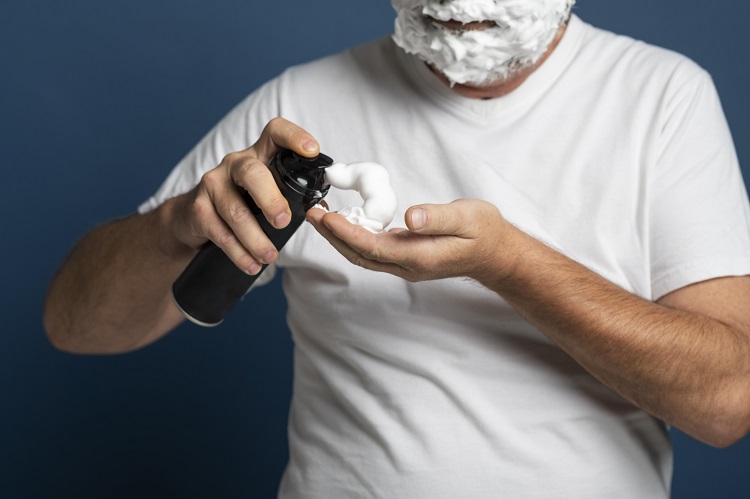
Looking after a growing beard keeps it healthy and stops it looking messy while it fills in. The routine is simple: keep it clean, keep it moisturised, and resist over-trimming.
Wash a growing beard two to three times a week, not daily, so you do not strip the natural oils, and apply beard oil daily to beat the itch and condition the skin. If flaking appears, a beard dandruff shampoo on wash days clears it.
Leave the length alone for the first four to six weeks, then tidy only the neckline and cheek line to keep it looking intentional. A full grooming routine keeps it neat as it fills in, and a beard care kit bundles the basics if you are starting from scratch.
Styling a beard while it fills in
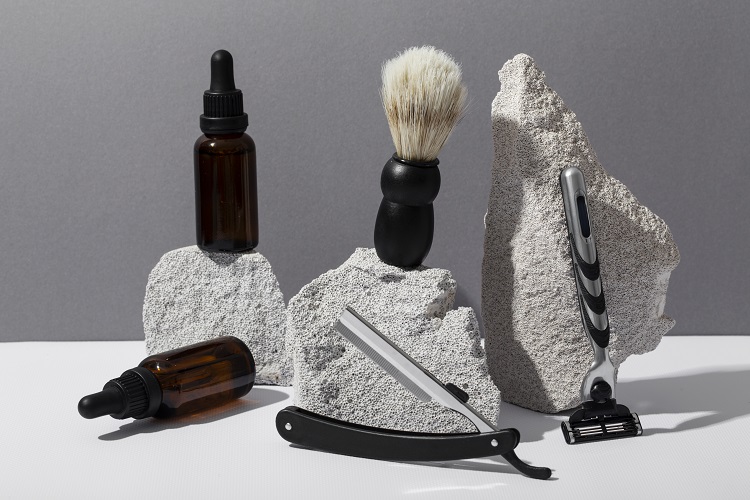
While a beard develops, a clean short style looks far better than an untamed one, so keep the edges sharp and the shape simple. See our short beard styles and stubble beard styles for early-stage looks, and our full beard styles for where you are heading.
Frequently Asked Questions
These cover what men search for most about growing a beard.
A beard grows about half an inch a month, so a short full beard takes two to four months and a longer, fuller beard takes six months or more. The timeline is largely fixed by your growth rate, so the main variable is how long you choose to grow it.
If your genetics do not support a full beard, no product will reliably create one, since the number and sensitivity of your follicles are set by your genes. The best approach is to grow what you can, keep it well shaped, and choose a style that suits your coverage.
Minoxidil is the option with the most evidence for those who want to try a medical route, and it is worth discussing with a dermatologist.
Often, yes. Many men find patchy areas fill in through their twenties and into their thirties as the beard matures. Growing it longer also lets denser areas cover thinner ones, which improves the look while you wait.
Beard growth is driven mainly by dihydrotestosterone, or DHT, which the body converts from testosterone. However, beard fullness depends more on how sensitive your follicles are to DHT, which is genetic, than on how much testosterone you have.
Not unless you are genuinely biotin deficient, which is rare in anyone eating a balanced diet. Research shows biotin only improves hair in people with an underlying deficiency or condition, with no benefit in healthy men.
Save your money unless a blood test shows you are actually low.
Whole foods that supply protein and hair-supporting nutrients help most: eggs, lean meat, fish, nuts, leafy greens, and beans. These prevent the deficiencies that can hold hair back.
A good diet supports your beard, but it will not push growth past your genetic ceiling.
Exercise improves circulation and overall health, which support healthy follicles, but its direct effect on beard growth is modest. Treat it as one of several healthy habits that remove obstacles rather than as a growth trick.
Chronic stress can disrupt the hormonal balance that supports healthy hair and, in some cases, contribute to shedding. Managing stress helps your beard indirectly by keeping your body in a healthier state.
Sleep is when the body repairs itself and regulates hormones, so consistent, quality sleep supports growth indirectly. Poor sleep works against the healthy conditions a beard needs to fill in.
Beard oil is the better choice while growing a beard, since it reaches the skin and follicles, whereas balm mainly conditions and holds the hair. Neither actually grows hair, but oil creates healthier conditions and beats the itch in the early stages.
For most men, growing naturally with patience and good health is the sensible first approach, since it carries no cost or side effects. Minoxidil has real but limited evidence and can help some men, but it is an off-label medication with possible side effects, so discuss it with a doctor before starting.
Leave the length alone for the first four to six weeks so it can fill in and you can see its true shape. After that, tidy only the neckline and cheek line to keep it neat, and save any real trimming for once it has reached the length you want.
Wash a growing beard two to three times a week with a dedicated beard wash, not daily. Over-washing strips the natural oils and causes the dryness and itch common in the early stages.
Beard itch in the growing phase comes from dry skin under new stubble, so a daily beard oil is the main fix. Wash with a gentle beard wash rather than soap, and use a dandruff shampoo on wash days if flaking appears.
Be patient, since a teenage beard is still developing and often will not fill in until your twenties. Focus on general health, keep the skin clean, and avoid adult growth medications, which are not appropriate for young teens without medical advice.
Yes. Beards commonly continue to fill in and improve into the thirties and forties, so it is rarely too late. The same habits apply at any age: patience, healthy living, and good skin and beard care.
For the first four to six weeks, let it grow wild so it fills in evenly and you can see the full shape. After that, light trimming of the neckline and cheek line keeps it looking intentional without sacrificing length or coverage.
The Bottom Line
Growing a beard comes down to patience, healthy habits, and accepting your genetic ceiling. Stop shaving, push through the awkward stage, care for the skin, and give it months rather than weeks, and you will reach the fullest beard your genes allow.
Be honest about the products, since most do little beyond conditioning, minoxidil is the one medical option with real evidence, and supplements help only if you are deficient. Work with the beard you have and shape it well, and that is what makes the difference.
Ready for the next step? Explore the rest of the beard care system.
How to Groom a Beard Top 20 Beard Styles Beard Care Products Beard Grooming ToolsReferences
The health and growth claims in this guide are supported by the following peer-reviewed studies and official health sources.
- [1] Ingprasert, S., Tanglertsampan, C., Tangphianphan, N., & Reanmanee, C. (2016). Efficacy and safety of minoxidil 3% lotion for beard enhancement: A randomized, double-masked, placebo-controlled study. The Journal of Dermatology, 43(8), 968–969. https://doi.org/10.1111/1346-8138.13312
- [2] Patel, D. P., Swink, S. M., & Castelo-Soccio, L. (2017). A review of the use of biotin for hair loss. Skin Appendage Disorders, 3(3), 166–169. https://doi.org/10.1159/000462981
- [3] Almohanna, H. M., Ahmed, A. A., Tsatalis, J. P., & Tosti, A. (2019). The role of vitamins and minerals in hair loss: A review. Dermatology and Therapy, 9(1), 51–70. https://doi.org/10.1007/s13555-018-0278-6
- [4] National Institutes of Health, Office of Dietary Supplements. (2022). Biotin: Fact sheet for health professionals. https://ods.od.nih.gov/factsheets/Biotin-HealthProfessional/

I’m a regular guy who got way too into beard care and started writing it all down. Everything here comes from my own experience with my own beard, not from a brand brief.