
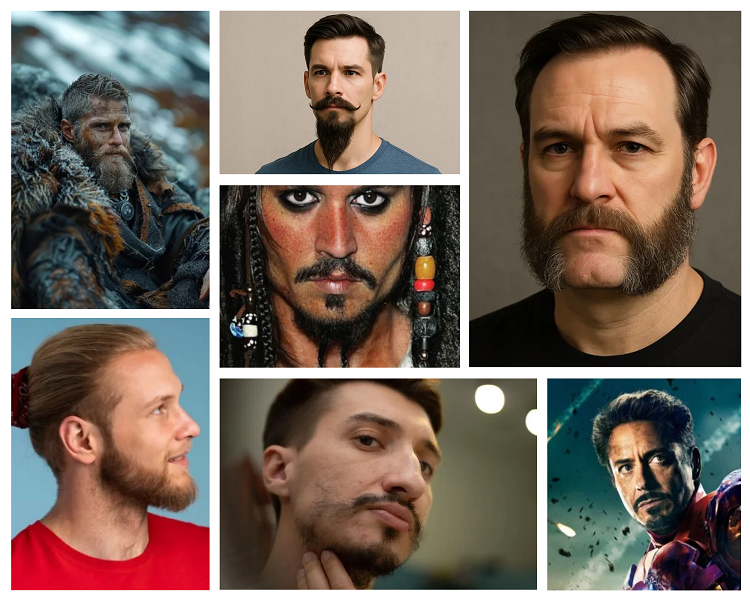
Beard fashion moves fast. A look that felt fresh last year can read as dated now, and with fade techniques, lengths, and textures all shifting, it is hard to know which style is actually in right now. In 2026, men’s beard styles have taken a cleaner, more intentional turn.
This is the most complete beard styles guide on the site. You will find the top 20 beard styles for men in 2026 first, each with a photo, who it suits, and how to maintain it. After the main list we break the styles down by face shape, by length, by hair type and color, and by age, then finish with a face-shape selector, a grooming routine, and the questions men ask most.
- The Top 20 Beard Styles for Men in 2026
- Beard Styles by Face Shape
- Beard Styles by Length: Short, Medium & Long
- Beard Styles by Hair Type & Color
- Beard Styles for Bald Men
- Beard Styles by Age
- Best Styles for a Patchy or Thin Beard
- How to Choose the Right Beard Style
- How to Maintain Any Beard Style
- Frequently Asked Questions
The Top 20 Beard Styles for Men in 2026
These are the 20 most popular beard styles for men right now, ranked and photographed, with the face shapes each one flatters and the upkeep it takes. Tap any style to read its full deep-dive guide.
| Style | Best face shape | Length | Upkeep |
|---|---|---|---|
| 1Italian beard | Oval, rectangular | Medium to full | Weekly cheek line |
| 2Van Dyke beard | Round, square | 10 to 15mm | Every 3 to 4 days |
| 3Tony Stark beard | Angular | Thin, sculpted | Daily |
| 4Jack Sparrow beard | Oval, long | 4 to 6 inches | Regular conditioning |
| 5Balbo beard | Narrow, diamond | Short to medium | Every 2 to 3 days |
| 6Patchy beard styles | Works with patchy | Short stubble | Every 2 to 3 days |
| 7Mutton chops | Oblong, rectangular | Medium to long | Weekly edges |
| 8Neck beard | Thin jaw growth | 10 to 15mm | Every few days |
| 9Ducktail beard | Round, wide | Long, tapered | Barber plus home |
| 10Extended goatee | Round, square | Medium | Every few days |
| 11Stubble beard | All shapes | 1 to 3mm | Every 2 to 3 days |
| 12Viking beard | Oval, rectangular | 6 months plus | Daily butter |
| 13Full beard | Oval, even growth | Full | Scheduled trims |
| 14Faded beard | All shapes | Any plus fade | Multi-guard blend |
| 15Circle beard | Square, angular | Short to medium | Every few days |
| 16Goatee | Round | Chin only | Consistent |
| 17French beard | Oval, square | 5 to 10mm | Every few days |
| 18Anchor beard | Strong jawlines | Thin lines | Frequent |
| 19Soul patch | Any | Small tuft | Every few days |
| 20Chin strap beard | Strong jawlines | 1 to 2cm band | Every 2 to 3 days |
1. Italian Beard
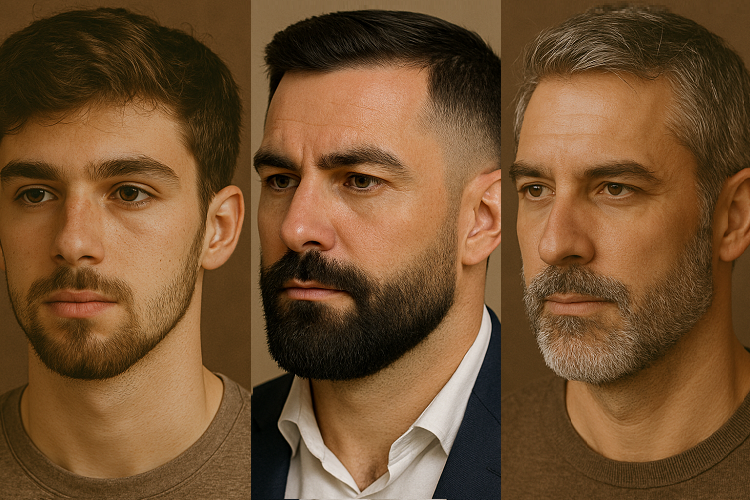
The Italian beard connects a full mustache to a rounded, well-groomed beard that hugs the jawline tightly. The cheek line stays clean and the neckline sits just above the Adam’s apple. Every edge looks deliberate.
Clean upper cheeks paired with dense coverage along the jaw create a structured, angular look that photographs well and reads as polished without tipping into corporate. Oval and rectangular face shapes benefit most, because the rounded chin coverage balances longer facial proportions.
Trim the cheek line weekly. Apply a quality beard butter to keep the hair soft and shaped throughout the day.
2. Van Dyke Beard
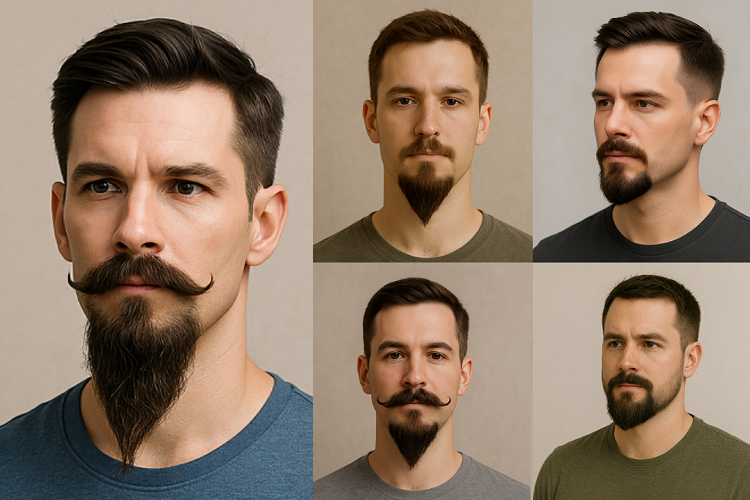
The Van Dyke beard keeps the cheeks completely clean-shaven while pairing a pointed chin beard with a disconnected mustache. The separation between mustache and goatee is what makes this style distinctive.
The disconnect between the mustache and the goatee is what makes it work for men who cannot grow thick cheek hair but have strong chin and upper-lip density, since it turns limited coverage into a deliberate design. Round and square face shapes gain visible elongation from the pointed chin section.
Precision trimming every 3 to 4 days keeps the disconnect sharp and the goatee at a clean 10 to 15mm.
3. Tony Stark Beard
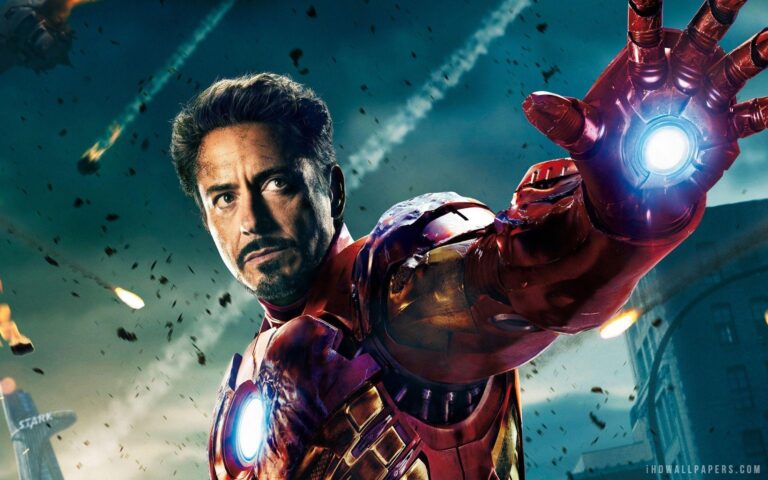
The Tony Stark beard is a thin, sculpted chin strap and goatee combination where every line is razor-sharp and intentional. Nothing about this style is accidental.
The whole look is built on line work, so the appeal is maximum definition with minimum bulk. It pairs best with angular face shapes and needs dense, dark facial hair for the sharp lines to show clearly, while sparse or light-coloured growth makes it difficult to maintain visibly.
Expect daily touch-ups with a precision beard trimmer to keep the lines clean.
4. Jack Sparrow Beard

The Jack Sparrow beard combines braided elements, beard beads, and a deliberately unkempt growth pattern. This requires length, at least 4 to 6 inches of chin growth before braiding becomes possible.
Because it relies on braids and beads, it only works once you have real length, and it rewards men who have grown their beard out rather than trimmed it down. Oval and long faces suit it best, where the vertical lines of the braids complement the proportions.
Braided beard techniques and regular conditioning with beard oil prevent tangling and breakage in the braided sections.
5. Balbo Beard

The Balbo beard features a disconnected mustache with a beard covering the chin and lower jaw while leaving the sideburns completely clean. The jawline gains strong definition without full-coverage facial hair. Robert Downey Jr. made this look widely recognized.
It solves a common growth problem: many men grow thick chin hair but weak sideburns, and the Balbo turns that limitation into an intentional, sharp design rather than a gap to hide. It flatters narrow and diamond-shaped faces by adding width and structure around the chin.
Maintaining the clean cheek and sideburn areas takes shaving every 2 to 3 days to keep the borders crisp.
6. Patchy Beard Styles

Not every man grows thick, uniform facial hair. Patchy beard styles work with uneven growth instead of hiding it. The key is choosing a length that minimizes visible gaps, usually a medium stubble or shorter beard where denser areas create natural texture.
The approach is simple: style what you actually grow instead of waiting for the gaps to fill in. A shorter length lets the denser areas read as deliberate texture rather than patchiness, which is what separates an intentional patchy beard from an unfinished one.
Using a derma roller for beard growth stimulates follicle activity in thinner areas over time, and these thin beard hacks help the coverage you have look fuller.
7. Mutton Chops
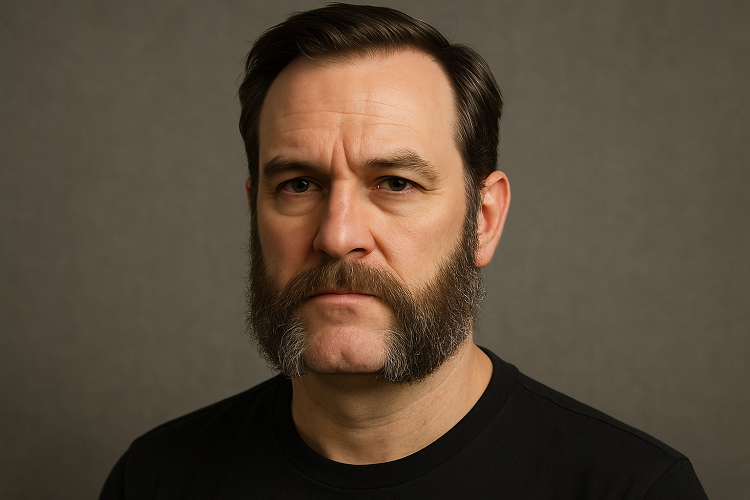
Mutton chops extend the sideburns into thick, wide patches that cover the cheeks and jaw while keeping the chin clean-shaven. Bold, unapologetic, and impossible to ignore. Hugh Jackman’s Wolverine put the modern version on the map.
This is not a subtle choice. It demands confidence and enough cheek coverage to fill out the wide shape, which is what makes it read as a deliberate retro statement rather than an accident. Oblong and rectangular face shapes benefit most, since the wide sideburns add visual balance.
Trim the outer edges weekly and keep the chin cleanly shaved for contrast.
8. Neck Beard
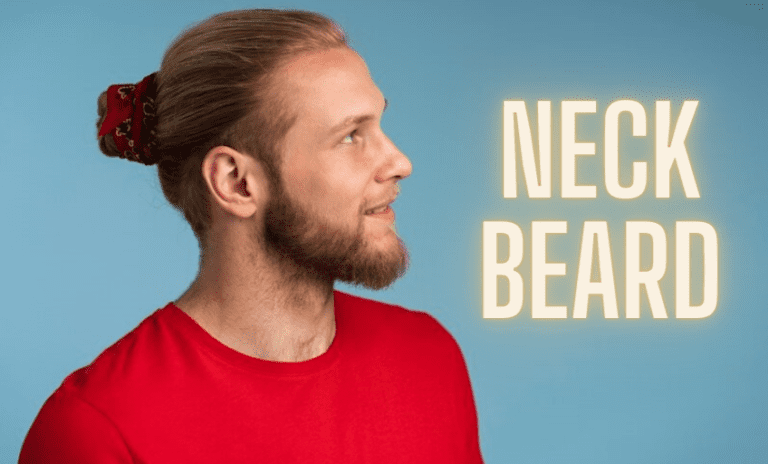
The neck beard grows below the jawline and across the neck. It is often dismissed, but an intentionally styled neck beard works as a transitional phase toward a fuller beard, or as a standalone look when kept at a controlled length.
The critical factor is a clearly defined lower boundary held at a uniform length. Men with thin jaw-level growth sometimes find the neck area grows in thicker than the cheeks, which makes this a genuinely practical option rather than the fallback it is often treated as.
Without deliberate maintenance the style loses its intentional appearance within days, so trim the upper border along the jawline and hold the length around 10 to 15mm.
9. Ducktail Beard
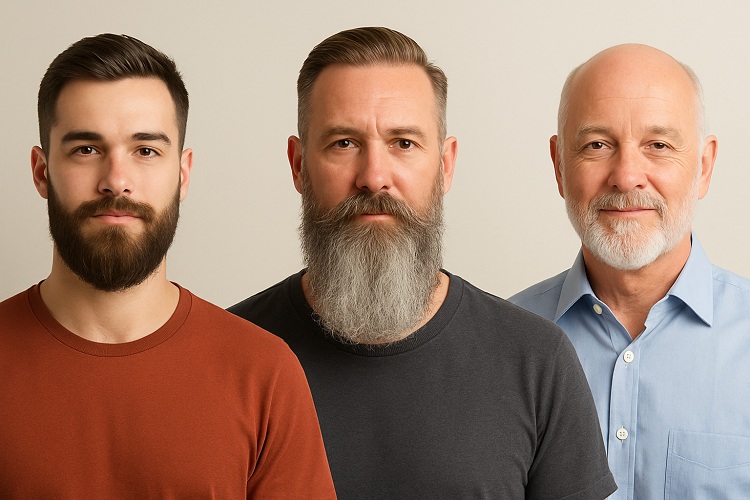
The ducktail beard tapers chin growth into a pointed shape while keeping the sides shorter and closer to the face. The V-shaped silhouette elongates the chin and adds definition to the lower face, which makes it a strong match for round and wide face shapes.
Its appeal is that it bridges rugged length and structured grooming: men who have grown their beard out over three to four months can keep the length while still reading as deliberate rather than shaggy. The taper is what does the work.
A skilled barber handles the initial taper cut, and regular home maintenance with a beard comb and trimmer keeps it looking intentional between appointments.
10. Extended Goatee

The extended goatee stretches the standard goatee shape along the jawline toward the ears. It gives more coverage than a classic goatee, but the cheeks stay clean.
It lets men who cannot commit to a full beard still define the jawline with real structure. Round and square face shapes benefit most, since the jawline coverage creates a slimming, angular effect that a full beard sometimes masks.
It sits neatly between minimal facial hair and full coverage without landing in an awkward middle ground, and it suits men with patchy cheeks who still want a fuller front profile.
11. Stubble Beard
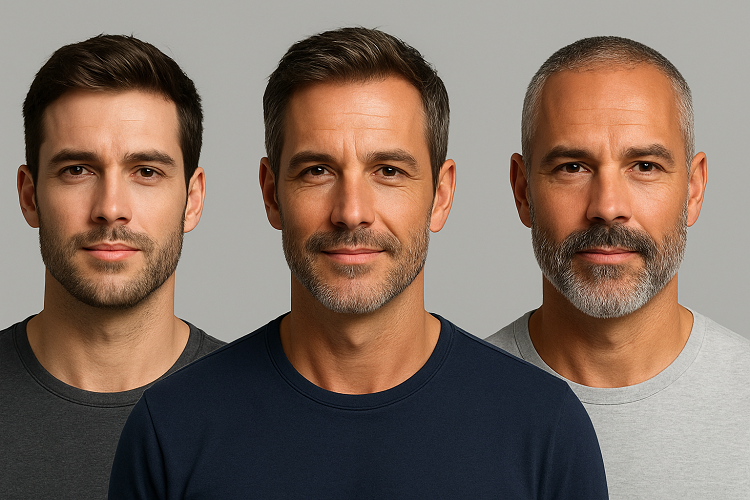
The stubble beard, sometimes called the 5 o’clock shadow, is the lowest-maintenance option on this list and one of the most consistently attractive. It sits at 1 to 3mm and adds shadow and definition to the jawline without covering any features.
Its strength is consistency. Held at an even one to three millimetres, it looks sharp rather than accidentally unkempt, and that low-maintenance versatility is why it suits virtually every face shape and hair type and never really leaves rotation.
Trim every 2 to 3 days with a fixed guard and clean up the neckline weekly to hold that intentional, just-grown look.
12. Viking Beard

Viking beard styles are built on length, volume, and a raw aesthetic. Expect a minimum of six months of committed growth. The longer long beard styles in this category often incorporate braids, beads, and natural texture, and the look pairs especially well with a shaved or short head.
This is a commitment look built on length and visual weight, so it rewards months of patience over a clean corporate trim. It works on almost all face shapes, and especially oval and rectangular.
Heavy conditioning is non-negotiable. Use beard butter daily and apply beard butter at night for deep hydration.
13. Full Beard

The full beard covers cheeks, chin, and jawline and connects to the mustache with complete coverage. It is the most traditional and universally recognized beard style, and it works best on men with even growth across all areas.
The modern take leans cleaner than the big, bushy full beards of the past, with tighter, more sculpted shapes and visible skin care underneath. Oval faces can grow it freely, while round-faced men should keep the sides shorter and the chin slightly longer.
Regular conditioning with the right amount of beard butter and scheduled trims keep a full beard looking deliberate instead of neglected.
14. Faded Beard

Faded beard styles blend the sideburns gradually into the beard, creating a seamless transition from head hair to facial hair. The technique works with almost any beard length and pairs perfectly with fade haircuts.
Treating the beard and the haircut as one unified design is what makes a fade look refined next to a beard with abrupt sideburn edges. It works with almost any length and flatters every face shape, which is why it pairs so naturally with a matching fade haircut.
Learning how to fade a beard takes multiple clipper guard settings. Start with the shortest guard near the sideburn and increase the length as you move toward the chin.
15. Circle Beard

The circle beard connects a rounded goatee with a mustache to form a circular shape around the mouth. Clean, professional, and surprisingly versatile.
It sits in a professional sweet spot, fuller than clean-shaven but tidier than a full beard, which makes it a reliable client-facing choice. It is particularly effective on square or angular jaw structures, where the circular shape softens hard lines.
Shape the outer edge every few days and keep the mustache-to-goatee connection seamless.
16. Goatee
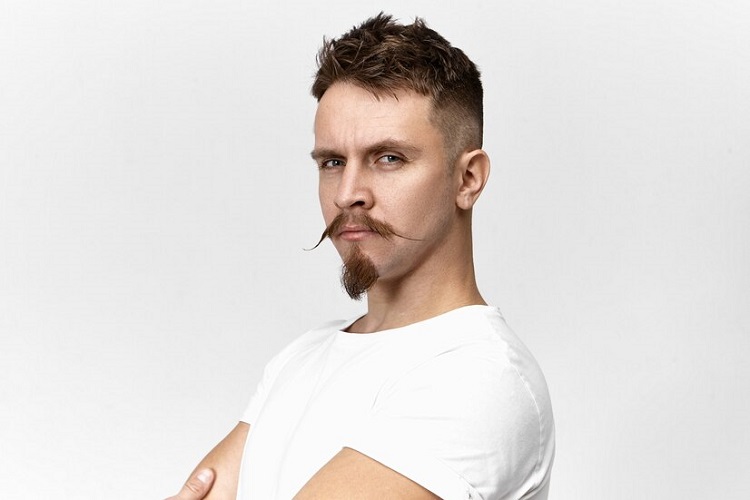
The classic goatee isolates growth to the chin only. No mustache, no cheek hair. It works across all beard densities because even thinner growth looks full in a small, concentrated area, which makes it a reliable pick for patchy cheeks.
A well-kept goatee takes about five minutes to groom and carries more visual impact than a poorly maintained full beard. It adds vertical length to round faces and draws attention to the lower face.
Trim consistently and shave the surrounding areas cleanly to keep the shape defined.
17. French Beard
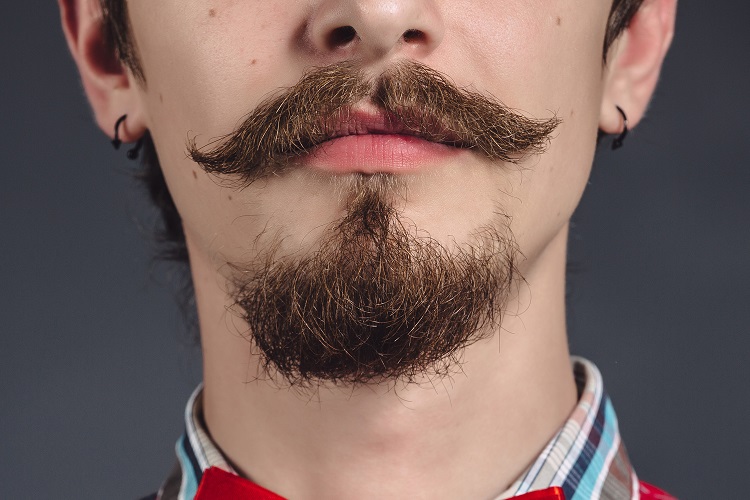
The French beard extends the goatee concept by adding a connected mustache and slightly wider chin coverage. It carries a refined, European sensibility that performs well in professional settings.
It signals effort without excess, which suits workplaces that expect polish but no longer demand clean-shaven. It flatters oval and square faces, and it looks cleanest at five to ten millimetres with the borders clearly defined.
A beard straightener manages curly or wavy chin hair that might disrupt the shape.
18. Anchor Beard

The anchor beard traces the jawline in a thin strip and connects to a pointed chin patch, forming a shape that resembles a ship’s anchor. Precision grooming at its most demanding.
It works best on men with a strong jawline, which gives the thin line work a natural guide to follow, and it reads as a genuine display of grooming skill. This is not beginner territory.
It takes steady hands with a trimmer and frequent maintenance to keep the thin lines from looking uneven.
19. Soul Patch
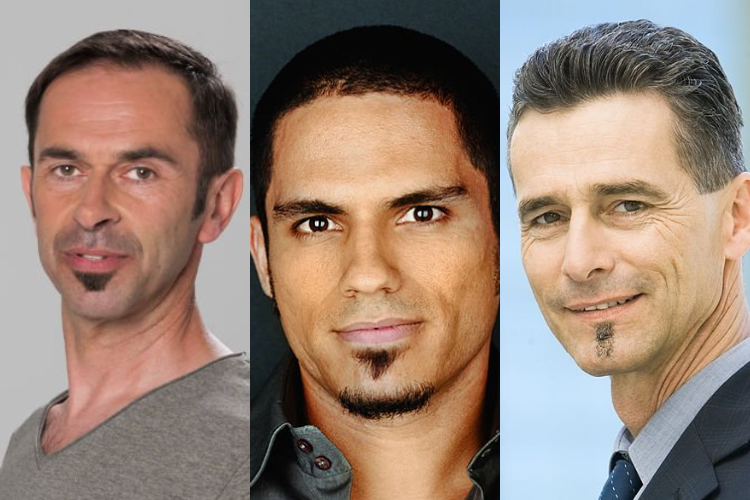
The soul patch places a small tuft of hair just below the lower lip. Minimal in size but distinctive in presence, it works standalone or as an accent within a larger beard configuration.
As a small, intentional detail rather than full-face coverage, it suits men who want a facial-hair identity without committing to a full routine. It has long been a favourite among musicians and creatives, which is part of its low-key, expressive appeal.
Upkeep is straightforward. Trim the patch to a consistent shape and length every few days.
20. Chin Strap Beard
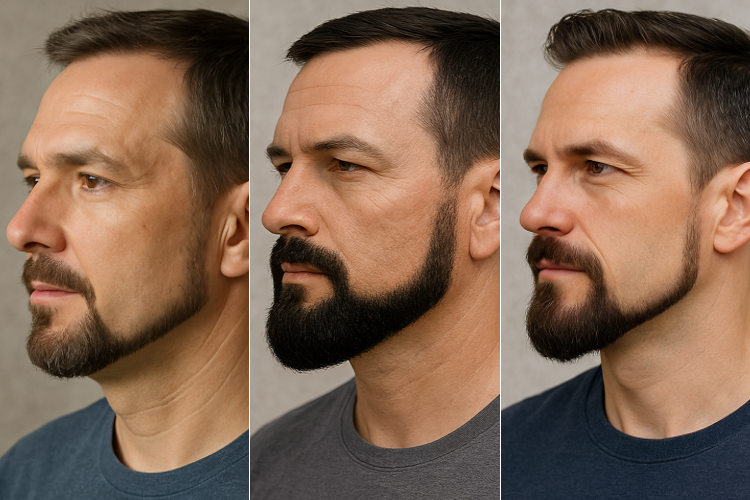
The chin strap beard follows the jawline from ear to ear in a narrow, defined band. It highlights jaw structure directly and works exceptionally well on men with strong, defined jawlines, and it makes rounder faces look more angular.
Keep the strap width between one and two centimetres for a modern interpretation. Wider straps drift into different styles, so consistency in line width is what holds the look together and keeps it reading as sharp and geometric.
The narrow band shows any unevenness, so trim it every 2 to 3 days, and pair it with a buzz cut for a cohesive, sharp look.
Beard Styles by Face Shape
Face shape is the single biggest factor in whether a beard style looks good on you. The rule is simple. Add length where your face is wide and short, and add width where your face is long and narrow. Here is the best match for each shape.
Oval Face
Oval faces are balanced and work with almost any style. Stubble, the full beard, the short boxed beard, and the Balbo are all strong choices. Keep it even and avoid adding too much length, which can start to stretch the face.
Round Face
Round faces benefit from styles that add vertical length and avoid width at the sides. The ducktail, Van Dyke, goatee, and chin strap all create definition that offsets a round jawline. Keep the cheeks shorter and the chin longer.
Square Face
Square faces already have a strong jaw, so the goal is to soften it rather than sharpen it further. The circle beard, short boxed beard, and rounded Italian beard add shape without hardening the angles. A little length at the chin rounds things off.
Rectangular or Oblong Face
Long faces should avoid adding extra vertical length. Mutton chops and a fuller-cheeked Italian beard add width and balance the proportions, while shorter sides keep the face from looking longer. Keep the chin trimmed short.
Diamond and Heart Face
Diamond faces are narrow at the chin, so a Balbo or full beard that adds width at the jaw restores balance. Heart-shaped faces narrow toward the chin too and suit fuller styles like the full beard, Italian beard, and the imperial beard, which add volume where the face tapers.
Triangle Face
If your jaw is wider than your forehead, keep the beard shorter and neat at the jaw so it does not add more weight down low. Light stubble, a short beard, and a tapered beard work best. Not sure of your shape? Pull your hair back in the mirror and note where your face is widest.
Beard Styles by Length: Short, Medium & Long
Length changes maintenance, formality, and which face shapes a style flatters. Here is how the looks split across short, medium, and long, with the named variants worth knowing.
Short Beard Styles (under 20mm)
Short beards are clean, professional, and low-maintenance. This group includes the corporate beard, the short boxed beard, stubble, the Balbo, and the Van Dyke. They suit workplaces and men who want a sharp look without daily fuss. See the full range in our guide to short beard styles.
Medium Beard Styles (20 to 50mm)
The medium length is the versatile middle ground with presence but manageable upkeep. Popular choices include the Garibaldi, the Bandholz, the Verdi, the circle beard, and the ducktail. Explore the options in our guide to medium beard styles.
Long Beard Styles (50mm and over)
Long beards are maximum statement and maximum commitment. The Viking, the Gandalf, the urban lumberjack, and the yeard, a beard grown a full year without heavy trimming, all live here. They need the most conditioning to stay soft and tangle-free. Browse them in our guide to long beard styles.
Beard Styles by Hair Type & Color
Your hair texture and color change how a style reads and how you maintain it. Match the look to what you actually grow.
Coarse and Coily Hair
Coarse, tightly coiled hair holds shape well, which suits the faded beard, the short boxed beard, and a goatee with a clean line-up at the cheek and neck. Beard oil softens the texture and reduces dryness. See the full breakdown of beard styles for black men.
Curly and Wavy Hair
Curly growth adds volume but can look uneven without control. A brush or straightener tames the shape, and structured styles like the French beard and short boxed beard hold their lines. More options in our guide to curly beard styles.
Straight and Finer Hair
Straighter, finer, or lighter-density growth suits concentrated styles that do not rely on thick cheek coverage, such as the goatee, Van Dyke, and chin strap. See styles built for this texture in our guide to Asian beard styles.
Grey, White and Salt-and-Pepper
Grey and mixed color read as distinguished, so lean into it rather than dyeing it out. A salt-and-pepper Italian or a neat short boxed beard looks sharp. Read more in our guides to grey beards, the salt-and-pepper beard, and white beard styles.
Blonde and Ginger
Lighter beard colors show less contrast against the skin, so defined lines matter more to keep the shape visible. See tailored looks in our guides to blonde beard styles and ginger beard styles.
Beard Styles for Bald Men
A strong beard balances a bald or shaved head and adds the definition the scalp no longer provides. The best pairings are the full beard, the Viking, the goatee, the Van Dyke, and stubble, all of which create contrast and frame the face.
Keep the neckline defined and the shape intentional so the beard reads as a deliberate choice rather than neglect. For a fuller walkthrough, see our guide to beard styles for bald men, and pair a bold beard with a clean buzz cut for the sharpest version of the look.
Beard Styles by Age
Age shifts what looks natural and what you might want a beard to do for you.
Younger Men
Men in their teens and twenties often use a beard to look older and more mature. Stubble adds maturity without ageing you heavily, and concentrated styles like the goatee or Van Dyke suit still-developing growth. Patchiness is common at this age, so work with it rather than forcing full coverage.
Mature Men
From the forties onward, grey and mixed color read as confident and distinguished. Shorter, sculpted styles such as the short boxed beard, French beard, and salt-and-pepper Italian look sharp and intentional. A longer beard adds the most perceived age if that is the goal, while a shorter, tidy shape takes years off. See our salt-and-pepper beard guide for the maintenance details.
Best Styles for a Patchy or Thin Beard
Patchy or thin growth is not a dead end. It just narrows the styles that work, and the right approach makes the coverage you have look deliberate.
Keep the length short, around 3 to 5mm, so denser areas blend the gaps into an even shadow across the face. Focus coverage where growth is strongest, which for most men is the chin, and let styles like the stubble, goatee, Van Dyke, and anchor do the work. A defined neckline and cheek line make thin growth look shaped rather than sparse.
Over time, a derma roller paired with beard oil can improve density in thinner areas. For uneven or shapeless growth, a tapered beard adds structure, and these thin beard hacks and dedicated patchy beard styles cover the rest.
How to Choose the Right Beard Style
Picking a beard style is not about copying someone else’s look. Your growth density, growth pattern, face shape, and grooming time decide what actually works. Here is what most men get wrong: they choose the style first and then fight their natural growth to force it. That approach fails almost every time. Use these four steps instead.
Step 1: Identify your face shape
Stand in front of a mirror with your hair pulled back and look at where your face is widest, the forehead, the cheekbones, or the jaw. Match that to the face shapes above.
Step 2: Assess your growth pattern
Grow your facial hair out for 2 to 4 weeks without trimming. Note where the growth is thickest, where it is thinnest, and where any bare patches sit. This tells you which styles are realistic for your density.
Step 3: Match style to growth
If your cheeks are patchy but your chin is thick, a goatee or Van Dyke is a better fit than a full beard. If growth is even everywhere, you have far more options open to you.
Step 4: Test and adjust
Try a style for at least three weeks before deciding, because beards look different at each stage and the first week rarely represents the final result. While you shape it, avoid the common beard mistakes that ruin otherwise solid styles, like trimming the neckline too high or taking the cheek line too aggressively.
How to Maintain Any Beard Style
The best style falls apart without upkeep. This simple routine keeps any beard on this list looking groomed instead of neglected.
Trim regularly. Shape the beard every 3 to 5 days and clean up the edges. For longer styles, trimming also prevents split ends and holds the shape. A quality beard trimmer with adjustable guards is the one tool you cannot skip.
Wash two to three times a week. Daily washing strips the natural oils that keep the skin healthy. Use a dedicated beard wash, and if you get flaking or itch underneath, switch to a beard dandruff shampoo on treatment days.
Condition every day. Beard oil hydrates the skin and softens the hair, while beard butter adds control on medium and long beards. If you are unsure which to use, our guides to beard butter vs oil and beard balm vs beard butter break down the differences.
Define the edges. A clean cheek line and a neckline set one finger-width above the Adam’s apple separate a shaped beard from an untamed one. This single step makes the biggest visual difference.
Brush and comb. Brushing trains the hair and distributes oil evenly for a fuller look. Learn the technique in our guide on how to comb your beard.
Style with wax when needed. For hold and shape, especially on the mustache or sculpted styles, a beard wax or mustache wax locks it in place. Finally, mind your beard etiquette to keep the look sharp in every setting.
Frequently Asked Questions
What is the best beard style in 2026?
There is no single best beard style, because the right one depends on your face shape, hair density, and lifestyle. That said, the Italian beard, faded beard, and stubble are the standout trends of 2026, prized for clean lines and low effort. Match the style to your face shape and real growth rather than chasing a trend.
What is the most attractive beard style?
Stubble is consistently rated the most attractive beard style in research. A 2013 study in the journal Evolution and Human Behavior found that heavy stubble at around ten days of growth scored highest for attractiveness across both short-term and long-term ratings. The full beard ranked highest for perceived masculinity.
What beard style suits a round face?
Beard styles that add vertical length suit a round face best, since they create a longer facial silhouette. The ducktail, Van Dyke, goatee, and chin strap all work well. Avoid wide, bushy styles that add width to the sides and make a round face look wider.
What beard style suits a square face?
Square faces already have a strong jaw, so styles that soften rather than sharpen it work best. The circle beard, short boxed beard, and a rounded Italian beard add shape without hardening the angles. A little extra length at the chin helps round the look.
What beard style suits an oval or long face?
Oval faces are the most flexible and suit almost any style, from stubble to a full beard, as long as it stays balanced. Long or rectangular faces should avoid adding vertical length and instead add width at the sides with styles like mutton chops or a fuller Italian beard, keeping the chin shorter.
Can a beard make you look more handsome?
Yes. A beard adds definition to the jawline, balances facial proportions, and can cover areas where the jaw or chin is less defined. The effect depends entirely on choosing a style that suits your face shape and maintaining it with clean lines and consistent grooming.
Does a beard make you look older?
A beard can add roughly three to five years to perceived age depending on the style and length. Fuller, longer beards add the most, while stubble adds maturity without ageing you significantly. Younger men often use a beard to look older, and older men may prefer shorter styles to avoid adding extra years.
How long does it take to grow a beard style?
Stubble takes about 5 to 10 days. Shorter styles like the goatee and circle beard can be shaped within 2 to 3 weeks. A full beard usually needs 4 to 6 weeks of growth, and long styles like the Viking take six months or more. The average beard grows around 1.25cm per month, though genetics, age, and hormones all play a part.
What is the best beard style for a patchy beard?
The best styles for a patchy beard are stubble, the goatee, and the Van Dyke. These either use a short length that blends thin spots or focus coverage on the chin where growth is usually thickest. Keeping a patchy beard at 3 to 5mm creates an even shadow that hides gaps.
What beard styles work for black men?
Coarse, tightly coiled hair holds shape well, which makes the faded beard, short boxed beard, and goatee popular choices. A clean line-up at the cheek line and neckline adds sharp definition. Beard oil softens the texture and reduces dryness. See our full guide to beard styles for black men for more.
Do women prefer beards or clean shaven?
Research shows mixed results, but stubble consistently ranks as the most attractive facial-hair length among women, while full beards score high for perceived masculinity and maturity. Clean-shaven faces tend to read as more youthful. Preference varies widely, so a style that suits your face shape matters more than aiming for one trend.
What tools do I need to maintain a beard?
Five tools cover almost every style: a beard trimmer with adjustable guards, a razor or detailer for edge work, a comb or brush for shaping, beard oil for hydration, and a beard wash for cleaning. Add wax if your style needs hold. A complete beard care kit bundles most of these together.
Can I match my beard style to my haircut?
Yes, and pairing the two improves the whole look. A faded beard pairs naturally with a mid fade or low fade, a full beard works with a textured crop, and a goatee suits a buzz cut. For more pairings, see our guide to men’s hairstyles with a beard.
The Bottom Line
The best beard style is the one you can maintain consistently. Start with your real growth, not aspirational growth, match it to your face shape, keep the lines clean, and commit to the grooming routine the style demands. Do that and any look on this list can work for you.
Once you have picked your style, dial in the products that keep it sharp:

I’m a regular guy who got way too into beard care and started writing it all down. Everything here comes from my own experience with my own beard, not from a brand brief.
Pingback: Best Beard Combs: 7 Top Picks Reviewed & Compared - Beard Care for Men
Pingback: Best Beard Moisturizers for Men: 7 Options Reviewed & Compared