
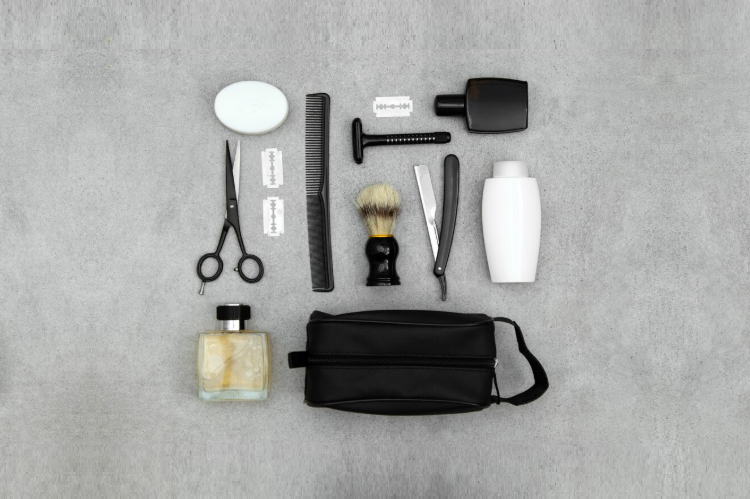
Beard grooming tools do three jobs: cut the beard to length, shape and detangle it, and keep it lying the way you want. You do not need a drawer full of gadgets to do that well.
A trimmer, a comb or brush, and a pair of scissors cover almost every beard. A straightener, a razor, and a derma roller are useful extras once you know you need them.
This guide explains what each beard tool does, what to look for, how to use it, and how to build a kit that suits your beard. Every tool with its own roundup links through so you can compare current picks.
Most men need three tools to start, then add the rest as their beard grows and their style gets more defined.
- 🔑 The must-have: a beard trimmer to set the length and shape
- 🧴 For every beard: a comb or brush to detangle, style, and spread oil
- ✂️ For detailing: beard scissors for strays and precise shaping
- 💈 Useful extras: a straightener for curl, a razor for sharp edges, a derma roller for patchy growth
- Beard Grooming Tools at a Glance
- Essential vs Optional Tools
- 1. Beard Trimmer
- 2. Beard Comb & Brush
- 3. Beard Straightener
- Other Tools Worth Having
- How to Choose the Right Tools
- Tools by Beard Type
- Use Your Tools in the Right Order
- How to Clean and Maintain Your Tools
- How We Assess Products
- Frequently Asked Questions
Beard Grooming Tools at a Glance
Here are the core beard grooming tools, what each one does, and who needs it. The three tools with their own buying guides are covered in depth in their own sections below.
| Tool | What it does | Priority | Best for |
|---|---|---|---|
| Beard trimmer | Cuts the beard to an even length and shapes it | Must-have | Every beard, any length |
| Beard comb | Detangles and styles, spreads oil evenly | Essential | Medium to long beards |
| Beard brush | Trains shorter hair and distributes oil | Essential | Short beards, oil distribution |
| Beard scissors | Precise snips for strays and detailing | Recommended | Long beards, mustache, detailing |
| Beard straightener | Relaxes curl and tames frizz with heat | Optional | Wavy, curly, or unruly beards |
| Razor / detailer | Defines crisp lines at skin level | Optional | Sharp necklines and cheek lines |
| Derma roller | Stimulates the skin to support growth | Optional | Patchy or thin beards |
If you buy nothing else, buy a good trimmer. It does more of the work than any other tool, and you can add a comb, scissors, and the rest over time.
Essential vs Optional Beard Grooming Tools
Not every tool earns a place in your kit right away. The split below shows what to buy first, what to add as your beard grows, and what only some men need.
A trimmer is the only true must-have, since it sets the length and shape that everything else builds on. A comb or brush and a pair of scissors round out the everyday kit.
Straighteners, razors, and derma rollers are job-specific. Buy them when you have the problem they solve, not before.
| Tier | Tools | When to buy |
|---|---|---|
| Start here | Trimmer, comb or brush | Day one, for any beard |
| Add soon | Beard scissors, a second comb or brush | As the beard grows past stubble |
| Add if needed | Straightener, razor or detailer, derma roller | For curl, sharp lines, or patchy growth |
1. Beard Trimmer
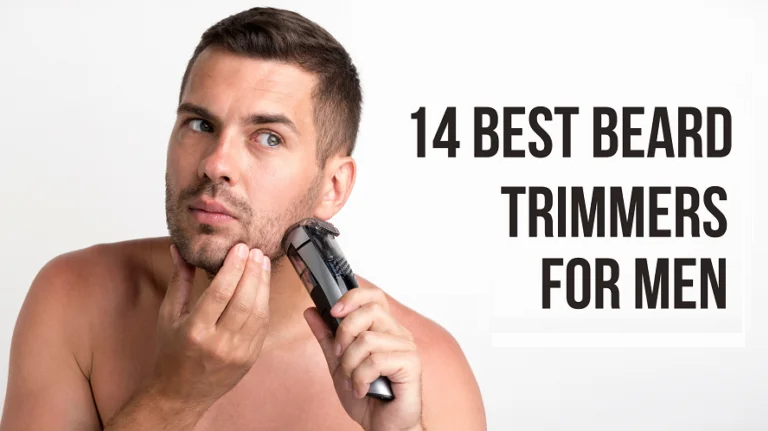
A beard trimmer is the one tool no beard can go without. It cuts the beard to an even length with a guarded blade, so it handles trimming, shaping, and cleaning up the neckline all from one handle.
What it does
- Cuts the whole beard to a consistent length with guards or a dial
- Shapes the beard and cleans up the cheek line and neckline
- Some models add a T-blade or bare blade for sharp edges and fades
- Replaces scissors for most everyday length control
What to look for
- Blade material: stainless steel for most beards, ceramic runs cooler for short stubble
- Guard stability over the number of settings, since rigid guards or a dial hold their length
- A strong or adaptive motor that does not pull on coarse, dense hair
- A lithium-ion battery, plus waterproofing if you want to rinse it clean or trim wet
How to use it
Start with a clean, dry beard and the longest guard, then work down one length at a time so you do not overcut. Move against the grain for an even cut, and switch to the bare blade for a defined neckline and cheek line.
Mistakes to avoid
- Starting with too short a guard and taking off more than you meant to
- Trimming a wet beard, which sits longer than it really is
- Setting the neckline too high, when it should sit just above the Adam’s apple
- Pressing hard, which pulls hair instead of cutting it cleanly
See our roundup of the best beard trimmers for men to compare corded and cordless picks by beard length and budget.
2. Beard Comb and Brush

A comb and a brush both shape the beard and spread product, but they do different jobs. A comb detangles and styles longer beards, while a brush trains shorter beards and distributes oil evenly.
What it does
- A comb glides through longer beards, detangles, and sets a style
- A brush trains shorter beards, adds fullness, and exfoliates the skin
- Both distribute beard oil and balm evenly from root to tip
- Combing before a trim lays the hair flat for a cleaner cut
Brush vs comb, in short
Use a comb for medium and long beards, for detangling, and for precise styling. Use a brush for short beards, to train the hair down, and to work oil evenly through to the skin.
What to look for
- A saw-cut wooden comb over a moulded plastic one, which snags and creates static
- Rounded, smooth teeth that do not scratch the skin
- Boar bristle for a brush, since it carries and spreads oil better than synthetic
- A dual-tooth comb with coarse and fine sides, and a folding comb for travel
How to use it
Comb or brush in the direction of growth after applying oil, working from the skin outward. Brush short beards to train the hair down, and comb longer beards to detangle and shape.
Mistakes to avoid
- Using a cheap plastic comb that creates static and tears hair
- Dragging hard through a dry, tangled beard instead of combing after oil
- Skipping the comb-through that distributes product evenly
- Brushing too aggressively and irritating the skin underneath
See the best beard combs for picks, the different types of beard combs and materials, and our guide on how to comb your beard for the technique.
3. Beard Straightener
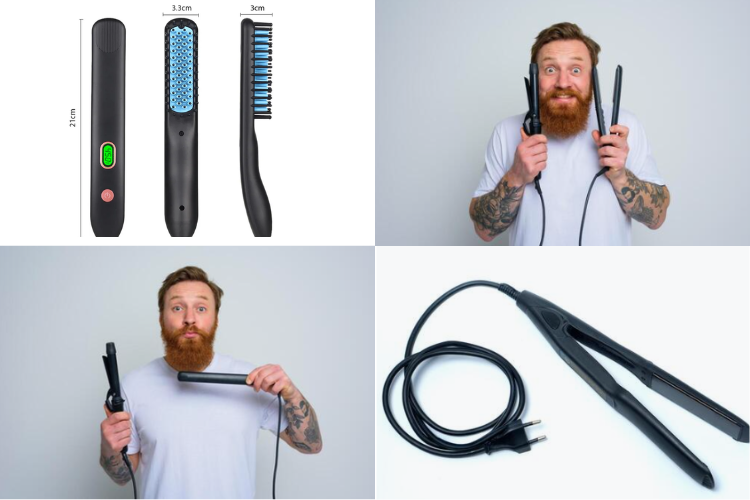
A beard straightener uses controlled heat to relax the curl in beard hair and hold it flat, with no chemicals. It tames frizz, makes a beard look longer and neater, and helps unruly or curly beards lie the way you want.
What it does
- Relaxes waves and curls so the beard lies flat and looks longer
- Cuts frizz, especially with ionic and tourmaline models
- Comes as a heated comb for short beards or a heated brush for medium to long
- Styles the beard without heavy balm or wax for hold
Do beard straighteners work?
Yes. A straightener temporarily breaks the bonds that hold the curl, so the hair takes the downward direction of the stroke and holds it for six to twelve hours. Results last longer in dry air and fade in humidity.
What to look for
- Anti-scald guard teeth that sit higher than the heated surface
- Several heat settings, so you can run lower for fine hair and higher for coarse
- Ceramic or tourmaline plates, with tourmaline better for coarse, curly hair
- An auto shut-off for safety, and a cordless option if you travel
How to use it
Only ever use it on a fully dry beard, since damp hair steams and damages the shaft. Apply a little oil first, comb out the tangles, then work in short downward strokes, one or two passes per section.
Mistakes to avoid
- Straightening a damp beard, which cracks the hair from the inside
- Running the heat too high, when daily use should stay under about 385°F
- Holding the tool in one spot instead of keeping it moving
- Skipping the oil before and the balm after that protect and set the beard
See the 8 best beard straighteners to compare heat, safety, and format, and our beard straightener guide for how to use one step by step.
Other Beard Grooming Tools Worth Having
Beyond the core three, a few tools solve specific jobs. Add them when your beard, your style, or your growth calls for them.
How to Choose the Right Tools for Your Beard
The right kit comes down to your beard length, your hair type, how you power the tools, and the quality of the blades and materials. Work through these and the shortlist gets clear fast.
📏 By Beard Length
Short beards need a trimmer and a brush, and little else. Medium and long beards add a comb and scissors.
Longer beards benefit from a straightener for control and a shaper for a clean line.
🧔 By Hair Type
Coarse or curly hair needs a trimmer with an adaptive motor and, often, a straightener to lie flat.
Fine hair does better with a gentle trimmer and a soft brush that does not over-work the skin.
🔌 Corded vs Cordless
Cordless trimmers give free movement and travel well, and lithium-ion models hold power as they drain.
Corded tools deliver constant power with no charging, which suits heavy or daily use.
🔪 Blade and Material Quality
Steel blades suit most beards, while ceramic runs cooler for long stubble sessions.
For combs and brushes, wood and boar bristle beat plastic and synthetic on static and oil spread.
🧖 Sensitive Skin
Sharp, clean blades and rounded comb teeth reduce the tug and scrape that irritate sensitive skin.
A waterproof trimmer is easier to keep hygienic, and a dull blade is the main cause of redness.
💰 Budget and Value
One good trimmer beats a padded kit full of parts you will not use. Judge by build and blade quality.
Add tools over time rather than buying everything at once, and spend most on the trimmer.
Materials That Matter
A few material choices separate a tool that lasts and performs from one that frustrates you.
Beard Grooming Tools by Beard Type and Need
Use this quick reference to match a kit to your beard type, length, and goal. Each tool is covered in full in its section above.
Use Your Beard Grooming Tools in the Right Order
Using the tools in the right sequence is what turns a set of gadgets into a clean, finished beard. Here is the order that works.
Wash and dry first. Clean the beard and dry it fully. A dry beard shows its true length, and dryness is essential before any heat or precise trimming.
Trim the length. Set the trimmer to the longest guard and work down a step at a time, so you never take off more than you meant to.
Edge the lines. Switch to the bare blade or a razor to define the neckline and cheek line. Keep the neckline just above the Adam’s apple.
Detail with scissors. Snip any stray hairs and shape the mustache and the ends, where scissors give more control than a trimmer.
Comb or brush. Work oil through the beard, detangle, and train the hair into shape from the skin outward.
Straighten if needed. On a dry beard, run a straightener in one or two downward passes per section to relax curl and frizz.
Finish with product. Apply a few drops of beard oil for the skin, then a balm or wax if your style needs hold.
How to Clean and Maintain Your Tools
Tools that are cleaned and cared for cut better and last far longer. A few minutes of upkeep prevents most of the problems men blame on the tool itself.
🧹 Clean the Trimmer
Brush the clippings out of the blade after every use, and rinse waterproof heads under the tap.
Trapped hair and product are the main reasons a trimmer starts to pull and slow down.
🛢️ Oil the Blades
Put a small drop of oil on the blades weekly to keep them cutting smoothly and quietly.
Self-sharpening, no-oil models are the exception, so check what your trimmer needs.
🧼 Wash Combs and Brushes
Wash combs and brushes in warm, soapy water to lift trapped oil, product, and skin.
Let them dry fully before use, and never leave a wooden comb soaking, which can warp it.
♻️ Sanitize and Replace
Wipe blades with a little alcohol to disinfect, especially if a tool is shared, and sharpen scissors when they drag.
Replace dull blades that pull, cracked combs, and shedding brushes rather than fighting them.
How We Assess and Recommend Tools
Our tool roundups are built on published specs and evidence, not hype. For each tool we look at blade and build quality, motor and battery specs where they apply, safety features, and the volume and consistency of verified buyer reviews.
We do not claim to have personally tested every tool on the site, because an honest recommendation is more useful than a manufactured one. Our recommendations are independent and never influenced by paid placement.
Heated tools carry a burn risk, and any blade can nick the skin. Follow the safety guidance for each tool, and keep heat settings within the safe range for beard hair.
Frequently Asked Questions
These cover what men search for most about beard grooming tools.
Most men need three tools to start: a trimmer to set the length and shape, a comb or brush to detangle and spread oil, and a pair of beard scissors for detailing.
A straightener, a razor, and a derma roller are useful extras once your beard or style calls for them.
A beginner needs a trimmer and a comb or brush, and that is enough for the first few weeks. Add scissors as the beard grows past stubble.
Start with one good trimmer rather than a padded kit, then build the rest of the kit over time.
A trimmer is better for setting an even length across the whole beard, while scissors are better for precise detailing and snipping stray hairs.
Most men use both: the trimmer for length and shape, scissors for the finishing detail on longer beards and the mustache.
A comb detangles and styles, and works best on medium and long beards. A brush trains shorter hair, adds fullness, and spreads oil evenly while exfoliating the skin.
Many men own both and use the comb for length and the brush for oil distribution and short-beard training.
Yes. Saw-cut wooden combs reduce static, glide more smoothly, and are gentler on the hair.
Moulded plastic combs often have rough seams that snag and tear the beard, which is why they cause more breakage.
Boar bristle is better for most beards, since it carries and distributes oil well and trains the hair into shape.
Synthetic bristles are firmer and can suit very coarse hair, but they spread oil less evenly than boar.
Cordless is better for most men at home, since it allows free movement and lithium-ion models hold power as they drain. It also travels well.
Corded trimmers give constant power with no charging, which suits very heavy or daily use.
Stainless steel suits most beards, resists rust, and is easy to service. Ceramic blades run cooler during long sessions, which suits men who trim short stubble often.
Guard stability and motor strength matter as much as the blade material for a clean, tug-free cut.
Yes. A heated straightener relaxes the curl in the hair so it lies flat and looks longer, holding the shape for six to twelve hours.
Results last longer in dry conditions and fade in humidity. Always use one on a fully dry beard to avoid damaging the hair.
They are safe when used correctly: on dry hair, below about 385°F for daily use, and with only one or two passes per section.
Apply oil before straightening and balm after, and choose a unit with anti-scald guard teeth and an auto shut-off.
A compact cordless trimmer and a folding pocket comb cover most needs in a small bag. A cordless straightener with a travel case is worth adding if you straighten daily.
Look for waterproof, dual-voltage tools and a travel lock so nothing switches on in your bag.
Sharp, clean blades and rounded comb teeth reduce the tug and scrape that irritate sensitive skin. A waterproof trimmer is easier to keep hygienic.
A dull blade is the most common cause of redness, so replace or sharpen tools before they start pulling.
A defined, disconnected style needs a trimmer for length, a razor or detailer for the sharp lines, and scissors for the fine detail.
The precise edges are what make the style read as intentional, so the razor work matters as much as the trimming.
Use the bare blade of a trimmer or a razor, not a guard, for a clean line. Place two fingers above the Adam’s apple and set the line just above that point.
Work from the center outward in short strokes, and step back from the mirror to check symmetry before committing.
A trimmer usually pulls because the blade is clogged with hair and product, is dull, or needs oil. A weak motor slowing in dense hair also tugs.
Clean and oil the blade, and if it still pulls after that, the blade or the trimmer is worn and due for replacement.
Brush out the clippings after every use and rinse waterproof heads under the tap. Add a drop of blade oil weekly unless the model is a no-oil, self-sharpening design.
Cleaning after each trim keeps the blade cutting cleanly and the tool hygienic.
Replace a tool when it stops doing its job well: blades that pull after cleaning, combs that crack or develop rough teeth, and brushes that shed heavily.
Scissors can be sharpened rather than replaced, and a quality trimmer blade lasts a long time with regular cleaning and oiling.
A derma roller can help by stimulating the skin, which some evidence links to fuller growth over time, especially when paired with a beard oil. It is a growth aid, not a styling tool.
Results vary and build slowly, so treat it as a long-term routine rather than a quick fix.
Wash and dry, trim the length, edge the neckline and cheek line, detail with scissors, comb or brush, straighten if needed, then finish with oil.
Working from length down to detail and finishing with product gives the cleanest result and avoids overcutting.
A pricier trimmer is worth it if the features match how you groom, such as an adaptive motor for coarse hair or precise short-length control. It is not worth it for a simple weekly trim.
Match the tool to the beard you actually maintain, since a wide kit of attachments does not help if the guard flexes at short lengths.
The Bottom Line
Beard grooming tools are simpler than the shelf makes them look. Start with a good trimmer and a comb or brush, add scissors as the beard grows, and bring in a straightener, razor, or derma roller only when you have the job they solve.
Match the tools to your beard length and hair type, keep them clean and sharp, and use them in the right order. That, more than any single gadget, is what keeps a beard looking sharp.
Got your tools sorted? Keep going with the rest of the beard care system.
Top 20 Beard Styles for Men The Complete Beard Care Products Guide
I’m a regular guy who got way too into beard care and started writing it all down. Everything here comes from my own experience with my own beard, not from a brand brief.
Pingback: Best Beard Combs: 7 Top Picks Reviewed & Compared - Beard Care for Men