
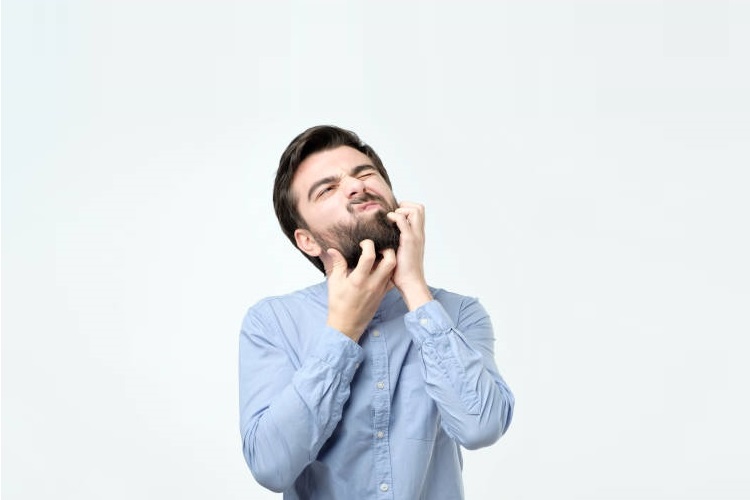
Most beard problems come down to a few root causes: dry skin, a missing routine, or the wrong products. Fix those and the itch, flaking, and frizz that frustrate most men clear up on their own.
A smaller group of issues, like acne under the beard, ingrown hairs, and bald patches, are genuine skin conditions. Those need the right care and sometimes a dermatologist, not just a new product.
This guide covers the most common beard problems one by one. For each, you get the cause first, then the fix, then the specific product or step that solves it.
Most beard problems are caused by dry skin or a poor routine, and they clear up when you wash two to three times a week, apply beard oil daily, and condition with a butter or balm. Problems like acne, ingrown hairs, and patchy bald spots are skin conditions and may need a dermatologist.
- 😣 Itch and dryness: a daily beard oil and a gentle wash
- ❄️ Flaking and beardruff: a beard dandruff shampoo, then moisturise
- 🌀 Frizz and breakage: condition, comb gently, and limit heat
- 🩺 Bumps, ingrowns, and bald patches: skin conditions, see a dermatologist
Common Beard Problems at a Glance
Here is a quick map of the most common beard problems, what usually causes each, and the fix. Every one is covered in detail below with the product that solves it.
| Problem | Usual cause | The fix |
|---|---|---|
| Itchy beard | Dry skin, new growth | Gentle wash, daily oil |
| Beard dandruff | Dry skin or seborrheic dermatitis | Dandruff shampoo, moisturise |
| Dry beard | Lack of moisture, over-washing | Daily oil, a butter, wash less |
| Oily beard | Too much product or excess sebum | Use less, wash regularly |
| Acne under the beard | Clogged pores or folliculitis | Cleanse gently, see a dermatologist if it persists |
| Ingrown hairs | Hairs curling back into the skin | Grow it out, exfoliate, shave correctly |
| Razor burn | Shaving irritation | Sharp blade or trimmer, lubrication |
| Frizzy beard | Dryness and damage | Oil, condition, straighten |
| Split ends | Dryness, heat, rough handling | Trim the ends, condition |
| Breakage | Dryness, aggressive combing | Condition, comb gently |
| Hair falling out | Shedding, breakage, or a condition | Find the cause, see a dermatologist if patchy |
| Alopecia barbae | Autoimmune (a form of alopecia areata) | See a dermatologist |
| Beard odour | Trapped food, buildup, bacteria | Wash regularly, dry it, oil |
Itch, Flaking, and Dryness
Why is my beard itchy?
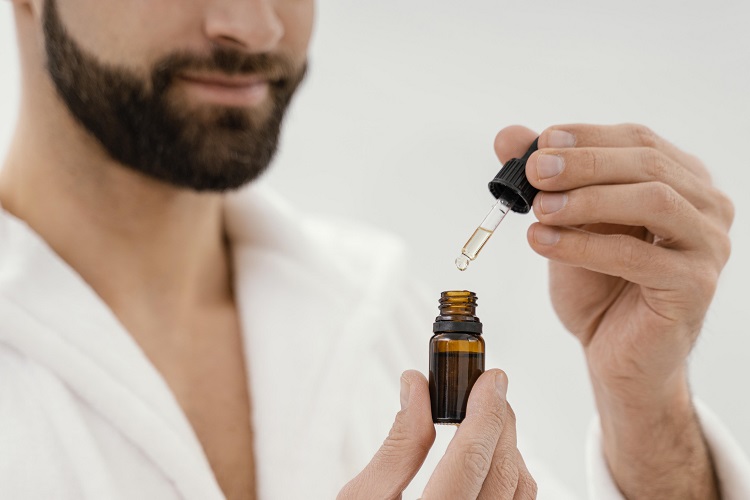
Your beard is itchy because the skin underneath is dry, and in the early weeks of growth, freshly cut hairs and trapped dead skin add to the irritation. It is rarely the hair itself and almost always the skin.
The fix is a daily beard oil to hydrate the skin, plus a gentle beard wash two to three times a week instead of soap. Avoid over-washing, which strips the natural oils and makes the itch worse.
See our roundup of the best beard oils for the formulas that calm itch fastest.
Why does my beard have dandruff?
Beard dandruff, or beardruff, is caused by dry, flaking skin, and often by seborrheic dermatitis, a common condition linked to a yeast that lives on the skin. The flakes are dead skin shedding faster than normal.
The fix is a beard dandruff shampoo with an active ingredient to treat the flaking, followed by oil to moisturise the skin. Do not over-wash, since dryness makes flaking worse.
See the best beard dandruff shampoo for what clears beardruff most effectively.
Why is my beard dry?
A dry beard is caused by a lack of moisture, usually from over-washing, harsh soap, hard water, or cold, dry weather stripping the skin and hair. Longer and coarser beards dry out fastest.
The fix is a daily beard oil for the skin and a richer beard butter for the hair, while washing only two to three times a week with a gentle wash. Moisture builds with consistency over a week or two.
The best beard butter roundup covers the deepest conditioning formulas for a dry, coarse beard.
Why is my beard oily or greasy?
An oily beard is usually caused by applying too much product, or by the skin producing excess natural oil, called sebum. A greasy look almost always means too much oil or butter is being used.
The fix is to use less product, a few drops of oil rather than a palmful, and to wash two to three times a week to clear buildup. Choosing a lighter oil also helps if your skin is naturally oily.
Skin Problems Under the Beard
The problems in this section are skin conditions rather than simple dryness. Good beard care helps prevent them, but no product is a cure, and some need medical treatment.
See a dermatologist if bumps are painful, spreading, filled with pus, or not clearing, or if you develop bald patches. Early treatment prevents scarring and lasting damage.
Why do I get acne or bumps under my beard?
Bumps under the beard are usually caused by clogged pores, trapped oil, and dead skin, or by folliculitis barbae, an inflammation of the hair follicles that is often a bacterial infection.[2] Heavy products and infrequent washing make both more likely.
The fix is to cleanse the skin gently, exfoliate lightly, and avoid piling on heavy oils and balms over blocked pores. If the bumps are painful, spreading, or full of pus, see a dermatologist, since folliculitis can need a prescribed treatment.
Why do I get ingrown beard hairs and razor bumps?
Ingrown hairs, known medically as pseudofolliculitis barbae, are caused by shaved or plucked hairs curling back and growing into the skin, which triggers red, itchy bumps.[1] They are more common in men with curly or coarse hair and after close shaving.[3]
The most effective fix is to stop shaving so closely and let the beard grow, since a hair that is not cut short cannot curl back in. Exfoliating with a beard brush, shaving with the grain, and not stretching the skin also help.
A good beard brush or comb lifts trapped hairs and exfoliates the skin. For stubborn or scarring cases, see a dermatologist.
Why do I get razor burn?
Razor burn is caused by irritation from shaving, usually a dull blade, dry shaving without lubrication, pressing too hard, or shaving against the grain. It shows up as redness, stinging, and small bumps right after shaving.
The fix is to use a sharp blade or switch to a trimmer, always lubricate with a gentle oil or cream, shave in the direction of growth, and let the skin recover between shaves. Applying beard oil afterward soothes the skin.
Switching to a quality trimmer avoids skin-level irritation altogether. See the best beard trimmers for men for options that keep length without the burn.
Frizz, Split Ends, and Breakage
Why is my beard frizzy?
A frizzy beard is caused by dryness and damage, where thirsty hair lifts and absorbs moisture from the air, along with humidity and rough handling. Curly and coarse beards frizz the most because they dry out fastest.
The fix is to condition daily with oil and a butter to weigh the hair down, then comb it into shape. For stubborn flyaways, a little beard wax adds control, and a heated straightener relaxes curl on a dry beard.
See the 8 best beard straighteners for taming curl, and the best beard wax for holding flyaways down.
Why does my beard have split ends?
Split ends are caused by dryness, heat damage, and rough treatment that fray the hair shaft at the tip. Over-washing, hot tools, and harsh combing all wear the ends down over time.
The only real fix is to trim the damaged ends off, since a split cannot be repaired once it forms. From there, prevent new ones by conditioning daily and handling the beard gently.
Softening and detangling the right way prevents most damage, so handle the beard gently and keep it conditioned through to the ends.
Why is my beard breaking?
Beard breakage is caused by dry, brittle hair snapping under stress, usually from aggressive combing, heat, and a lack of moisture. Dry hair has no flexibility, so it breaks rather than bends.
The fix is to keep the hair conditioned and supple, comb gently after applying oil, and limit heat from straighteners and dryers. A leave-in conditioner adds the strength that prevents snapping.
The best beard balms roundup covers the leave-in conditioners that keep hair strong and reduce breakage.
Beard Hair Loss and Thinning
Losing some beard hair day to day is normal, the same as scalp hair. But sudden loss, thinning patches, or smooth round bald spots are worth taking seriously.
If your beard is falling out in defined patches or thinning quickly, see a dermatologist to find the cause. It is the fastest route to the right treatment.
Why is my beard hair falling out?
Beard hair falls out for several reasons: normal daily shedding, breakage from dryness and rough handling, stress-related shedding, or a condition such as alopecia barbae. The pattern is the clue, since even thinning is different from round bald patches.
The fix depends on the cause, so rule out breakage first by conditioning and handling the beard gently, and support healthy growth with a good routine. For thinning linked to slow growth, a healthy skin and follicle routine helps most.
Our guide on beard oil for growth covers supporting healthy growth, and our patchy beard styles help you style around thin areas while they recover.
What is alopecia barbae?
Alopecia barbae is an autoimmune condition, a form of alopecia areata, in which the immune system attacks the beard hair follicles and causes sudden, smooth, round bald patches. The skin in the patches looks normal, with no scaling or scarring.
It is important to know that alopecia barbae is not caused by poor hygiene, grooming, or anything you did, and it is not contagious. In many men the hair regrows on its own, often within a year, though it can recur.
There is no product that cures it, so do not trust anything marketed as one. See a dermatologist, who can confirm the diagnosis and offer evidence-based treatments such as topical or injected corticosteroids to support regrowth.
Beard Odour
Why does my beard smell?
A beard smells because it traps food, drink, product buildup, and the natural oils and bacteria on your skin, especially if it is not washed and dried properly. A damp beard that never fully dries can develop a musty odour.
The fix is to wash it two to three times a week, rinse thoroughly, and dry it properly rather than leaving it damp. A daily beard oil keeps it fresh and the skin healthy between washes.
Beard Problems by Hair Type and Length
Some beard problems are more common with certain hair types, colours, and lengths. Here is what each tends to struggle with, and how to fix it.
A patchy beard is the other type-specific problem, and it is covered above under beard hair loss and thinning, where growing it longer and styling around the gaps does most of the work.
Preventing Beard Problems
Almost every problem on this page traces back to the same root cause: dry skin and a missing routine. A simple, consistent routine prevents the large majority of them before they start.
Wash two to three times a week, apply beard oil daily, condition with a butter or balm as the beard grows, and comb it gently. That handles itch, dryness, dandruff, frizz, and breakage in one go.
If you are building a routine from scratch, a beard care kit bundles the essentials in one box and is the easiest way to start.
Fix the root cause. Explore the full beard care system.
How to Groom a Beard How to Grow a Beard Beard Care Products Beard Grooming Tools Top 20 Beard StylesReferences
The skin-condition sections in this guide are supported by the following dermatology sources.
- [1] Ogunbiyi, A. (2019). Pseudofolliculitis barbae: Current treatment options. Clinical, Cosmetic and Investigational Dermatology, 12, 241–247. https://doi.org/10.2147/CCID.S149250
- [2] DermNet. (n.d.). Folliculitis barbae. https://dermnetnz.org/topics/folliculitis-barbae
- [3] DermNet. (2022). Pseudofolliculitis barbae. https://dermnetnz.org/topics/pseudofolliculitis-barbae

I’m a regular guy who got way too into beard care and started writing it all down. Everything here comes from my own experience with my own beard, not from a brand brief.
Pingback: Best Beard Shampoo: 9 Top Picks Reviewed & Compared - Beard Care for Men