
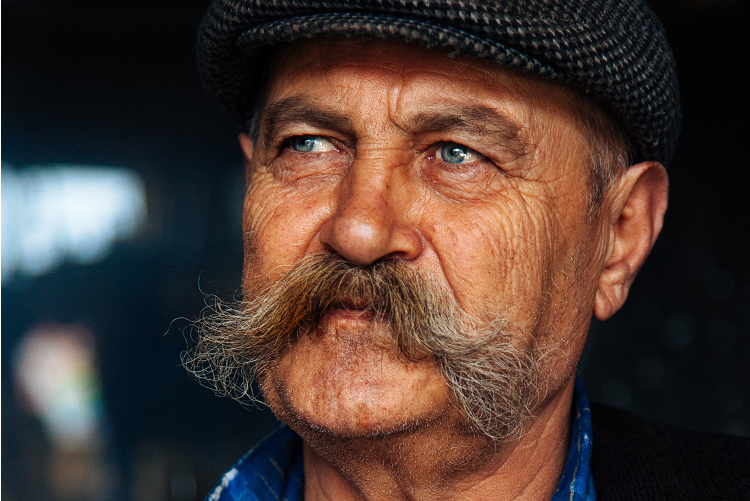
A mustache is facial hair on the upper lip worn as a style in its own right, and choosing one comes down to three things. How much hair you can actually grow above your lip, how much shaping you are willing to do each morning, and whether you are prepared to use wax.
Most men land in one of three places. A chevron covers the lip and needs nothing but a trim. A handlebar needs length, wax, and a few minutes every day. A pencil needs precision and almost no volume at all.
This guide defines every mustache style, shows which one suits your face shape, and covers how to grow, trim, shape and hold a mustache. Where a style has a full guide of its own, it is linked from its section.
Pick by how much you can grow and how much wax you are willing to use. Everything else is a variation on four groups.
- 🧔 Everyday, no wax: the chevron, the natural, the painter’s brush
- 💈 Styled, wax required: the handlebar, the English, the Dali
- 🪒 Big and bold: the horseshoe, the walrus, the Hungarian, the Fu Manchu
- ✂️ Thin or patchy growth: the pencil, or a beardstache to add weight below
- Mustache Styles at a Glance
- Every Mustache Style, Defined
- Which Mustache Suits Your Face Shape
- How to Grow a Mustache
- How to Trim and Shape a Mustache
- How to Style and Hold a Mustache
- The Mustache Grooming Kit
- Common Mustache Problems
- Get the Look
- How We Assess and Recommend
- Frequently Asked Questions
Mustache Styles at a Glance
Eighteen styles cover almost every mustache worn today. The table below shows what each one looks like, whether it needs wax to hold, and who it suits. Each is explained in the section underneath.
| Style | What it looks like | Wax needed | Best for |
|---|---|---|---|
| Chevron | Thick, covers the top lip, ends angled slightly down at the lip line | No | The default full mustache, most faces |
| Natural | Grown out and simply kept clear of the lip line, no shaping | No | A first mustache, lowest upkeep |
| Painter’s brush | Chevron shape with the ends trimmed square instead of tapered | No | Dense growth, a blunt squared finish |
| Lampshade | Chevron trimmed with straight angled sides, wider at the bottom | No | A neat, geometric finish |
| Pencil | A thin line sitting just above the lip, trimmed close and sharply defined | No | Thin or patchy growth, precise looks |
| Handlebar | Grown long at the ends and curled upward with wax | Yes, strong | Length, patience, daily styling |
| English | Long, parted at the center, ends pulled straight out to the sides, not curled | Yes, strong | Formal statement looks |
| Dali | Narrow, long, and pointed sharply upward at the ends | Yes, maximum | Theatrical, high-maintenance styles |
| Imperial | Full mustache with the ends sweeping and curling upward toward the cheeks | Yes, strong | Heavy growth and vintage styling |
| Cowboy | Thick, with drooping, loosely curled ends, less polished than a handlebar | Light | Rugged, worn-in looks |
| Hungarian | Very thick and long, combed outward from the center, bushy rather than sculpted | Light | Dense growth, traditional looks |
| Horseshoe | Full mustache with two bars running down to the jawline, an upside-down U | No | A strong jaw and dense growth down the sides |
| Fu Manchu | Two thin strips growing down past the mouth, separate, with a shaved gap under the lip | Light | Long and oval faces, patient growers |
| Walrus | Very thick and long, hanging over the top lip and covering the mouth | No | Dense growth, minimal shaping |
| Zappa | A thick, bushy mustache worn with a soul patch below the lip | No | A softer statement look |
| Toothbrush | Short and narrow, roughly an inch wide, sides shaved back | No | Historical interest only, see the FAQ |
| Beardstache | A full mustache worn over stubble on the cheeks and jaw | Optional | Adding weight below the mustache |
| Mustache and goatee | A mustache paired with or connected to chin hair | No | Balancing a narrow chin |
If you are growing your first mustache, start with the natural and decide later. Every other style on this list is cut out of that same growth.
Every Mustache Style, Defined
The styles fall into four groups: the ones you can wear without wax, the ones that need wax to exist at all, the big statement styles, and the hybrids that pair the mustache with hair elsewhere on the face. Find your group first, then pick inside it.
Everyday Styles (No Wax)
These hold their shape on their own. They are trimmed, not styled, and they suit men who want a mustache without a morning routine.
Chevron
The full mustache most people picture. It covers the entire top lip, sits wide, and angles down slightly at the corners so it follows the natural line of the mouth.
It is the most-worn mustache style there is, and it needs nothing but density and a weekly trim to the lip line. The Top Gun mustache is a chevron.
Natural
Grown out with no shaping beyond keeping the hair off the lip. This is where every mustache starts, and plenty of men stop here.
Trim only what hangs over the top lip and let the rest sit as it grows. It is the lowest-maintenance style on the list.
Painter’s Brush
A chevron with the ends cut square instead of tapered, so the mustache ends in a blunt vertical line at each corner of the mouth.
It reads heavier and more deliberate than a chevron and it needs dense growth right out to the corners to look right.
Lampshade
A chevron trimmed with straight angled sides, narrow at the top and wider at the bottom, which gives it the trapezoid outline it is named for.
It is the neatest of the full mustaches and it rewards a steady hand with a precision trimmer.
Pencil
A thin, sharply defined line of hair sitting just above the lip, kept narrow and trimmed close. Sometimes shaved into two halves with a gap under the nose.
It is the one full-face style that works on thin growth, because it needs precision rather than density. It also needs touching up every two or three days.
Styled and Waxed
These do not exist without wax. The hair is grown long, trained in one direction, and set. If you are not willing to spend two minutes on it each morning, pick from the group above instead.
Handlebar
Grown long at the ends and curled upward into the loop it is named for. It needs roughly two to three inches of length at the tips before it will hold a curl, which takes most men three to four months.
Our full guide covers the handlebar mustache variations, plus how to grow, curl and maintain one.
English
Long and narrow, parted at the center, with the ends pulled straight out to the sides and stiffened into points. It is the handlebar’s formal cousin, and the difference is that it does not curl.
The cheeks stay clean and the hair is trained sideways from day one. It needs strong wax and a fine comb.
Dali
Narrow, long, and pointed sharply upward into two thin spikes. It is the most extreme styled mustache and there is no low-effort version of it.
It needs maximum-hold wax, daily shaping, and a face that can carry a deliberately theatrical look.
Imperial
A large mustache with the ends sweeping upward and outward toward the cheeks, so the hair rises rather than curls into a loop.
It is often confused with the Hungarian. The difference is the upward set. The Hungarian is combed out and left bushy, the imperial is trained and lifted.
Cowboy
Thick and full, with the ends allowed to droop and curl loosely rather than being set into a clean loop. Deliberately less polished than a handlebar.
It uses light wax to control the ends and nothing more. It pairs well with stubble and a worn-in look.
Big and Bold
Statement mustaches. All of them need real density, and all of them take months rather than weeks.
Horseshoe
A full mustache with two bars of hair running straight down from the corners of the mouth to the jawline, forming an upside-down U. The cheeks and chin stay shaved.
It needs strong growth down both sides of the mouth, which is exactly where most men are thinnest. Check that area before committing.
Walrus
Very thick and long, grown out until it hangs over the top lip and hides the mouth. There is almost no trimming involved beyond keeping it out of your food.
It is the purest test of density. If your growth is fine or patchy, a walrus will look sparse rather than heavy.
Hungarian
Very thick and long, combed outward from the center parting and left bushy rather than sculpted. Wider and wilder than an English, and far less precise.
It needs light wax purely to keep the shape from collapsing, not to hold a point.
Fu Manchu
Two narrow strips grow down past the corners of the mouth and hang below the jaw, with the area under the lower lip shaved so the two sides never connect.
See the full Fu Manchu guide for the variations, the face shapes it suits, and how it differs from a horseshoe.
Hybrids and Historical
Styles where the mustache shares the face with other hair, plus the one style nobody wears any more.
Beardstache
A full, dominant mustache worn over short stubble on the cheeks and jaw. The mustache leads and the stubble frames it.
It is the best option if your mustache is strong but your beard growth is not. Our beard stache guide covers how to grow and trim one.
Mustache and Goatee
A mustache paired with chin hair, either connected around the mouth or left separate. Connected gives you a circle beard or a French beard. Separate gives you a Van Dyke.
It suits a narrow chin, because it adds weight low on the face. Start with the French beard guide for the connected version.
Zappa
A thick, bushy mustache worn with a soul patch directly below the lower lip, named after the musician who wore it.
It softens a heavy mustache by giving the eye a second point to land on, and it needs no wax at all.
Toothbrush
Short and narrow, roughly an inch wide, with the sides shaved back to leave a block of hair under the nose.
It was a mainstream style in the early twentieth century. Its association with Adolf Hitler ended that permanently, and it is listed here for completeness rather than as a recommendation.
Which Mustache Suits Your Face Shape
A mustache sits in the middle of your face, so it changes the proportions of everything around it. A wide mustache broadens the face. A mustache with vertical lines, like a horseshoe or a Fu Manchu, lengthens it. Match the style to what your face needs, and the same growth can read completely differently.
| Face shape | What to aim for | Styles that work | What to avoid |
|---|---|---|---|
| Round | Add angles and draw the eye downward | Horseshoe, Fu Manchu, pencil | Wide, bushy styles like the walrus, which add width |
| Oval | Nothing, the proportions are already balanced | Almost anything, chevron and handlebar especially | Nothing structural, choose on preference |
| Square | Balance a strong jaw with weight on the lip | Chevron, walrus, horseshoe, painter’s brush | The pencil, which looks undersized against a wide jaw |
| Oblong or long | Add width, never length | Chevron, walrus, handlebar, Hungarian | Fu Manchu and horseshoe, which stretch the face further |
| Heart | Add weight low, where the chin narrows | Chevron, beardstache, mustache and goatee | Thin styles, which leave the lower face looking bare |
| Diamond | Widen the mouth line to balance the cheekbones | Chevron, lampshade, painter’s brush | Narrow or pointed styles, which sharpen the face further |
How to Grow a Mustache
Most men reach a full, shapeable mustache in four to six weeks from clean-shaven. The upper lip grows more slowly than the cheeks and jaw, and the corners of the mouth fill in last, which is why an early mustache can look thin for longer than a beard does.
The growth stages
- Week 1 to 2: stubble. It looks like nothing. Do not trim, do not judge it yet.
- Week 3 to 4: the shape appears and the itch peaks. Clean the hair off the top lip and leave everything else alone.
- Week 5 to 6: enough length and weight to trim and shape properly. This is where most styles become possible.
- Month 3 to 4: enough length at the ends for a handlebar, English or Dali. A curl needs roughly two to three inches at the tips.
Growing it thicker and faster
Density is set by genetics. No product adds follicles you were not born with, and any brand promising otherwise is selling you something. What you can control is whether the hair you do have reaches its full length and looks its best.
- Do not trim in the first three to four weeks. Early trimming is the single most common reason a mustache looks patchy.
- Keep the skin underneath clean and moisturized. Dry, flaking skin makes thin growth look thinner.
- Comb the hair down daily once it has length. Trained hair covers more area than untrained hair.
- Give it eight weeks before you judge the corners. They are the last area to fill in on almost every man.
Two approaches have real evidence behind them for growth, a derma roller and minoxidil, and minoxidil is a medication rather than a grooming product. Both are covered in our guide on how to grow a beard, and both are worth discussing with a professional before you start.
How to Trim and Shape a Mustache
Trimming a mustache is mostly about one line: the lip line. Get that right and the style takes care of itself. Everything below assumes a dry mustache, because wet hair sits longer than it really is and you will cut too much.
Grow first, trim second. Leave it alone for three to four weeks. The only exception is hair that hangs into your mouth, which you can take off at any point.
Comb it straight down. Comb every hair down over the lip so it sits at its true length. Uncombed hair hides the long ones and you will miss them.
Cut the lip line with scissors. Take off only the hair that crosses the top lip, working in small snips from the center outward. Cut less than you think you need. You can always take more.
Set the overall length with a trimmer. If you want it shorter all over, start with a long guard and step down one setting at a time. Nobody has ever regretted going down slowly.
Define the top edge only if the style needs it. A chevron, walrus or natural looks better with a soft top line. A pencil, toothbrush or lampshade needs a clean shaved edge under the nose.
Shape the ends and check symmetry. Trim the corners to match, then step back and look at your face straight on, not at the mustache. Chasing symmetry up close is how men trim a mustache down to nothing.
Repeat every seven to ten days. A shaped mustache needs the lip line cleaned up roughly once a week. A pencil needs it every two or three days.
Mistakes to avoid
- Trimming wet, which makes you cut far shorter than you intended
- Trimming one whole side, then the other, instead of alternating and comparing
- Shaving a hard line under the nose on a style that does not call for it
- Using a beard trimmer with no guard on the lip line, which takes off far too much
For the rest of the face, including the neckline and cheek line that frame a mustache when you wear it with stubble, see our full routine on how to groom a beard.
How to Style and Hold a Mustache
Wax is what separates a styled mustache from a grown one. A chevron, walrus, natural or horseshoe needs none of it. A handlebar, English, Dali or imperial will not hold its shape for an hour without it.
The method is the same for all of them. Use a pea-sized amount, warm it between your fingertips until it turns clear and workable, then push it through the hair from the center outward and shape the ends last. Less wax applied warm always beats more wax applied cold, which clumps and never sets evenly.
Our roundup of the best mustache wax compares hold strengths, formulas and finishes, and walks through the full application from a flat groomed look to a full handlebar curl.
The Mustache Grooming Kit
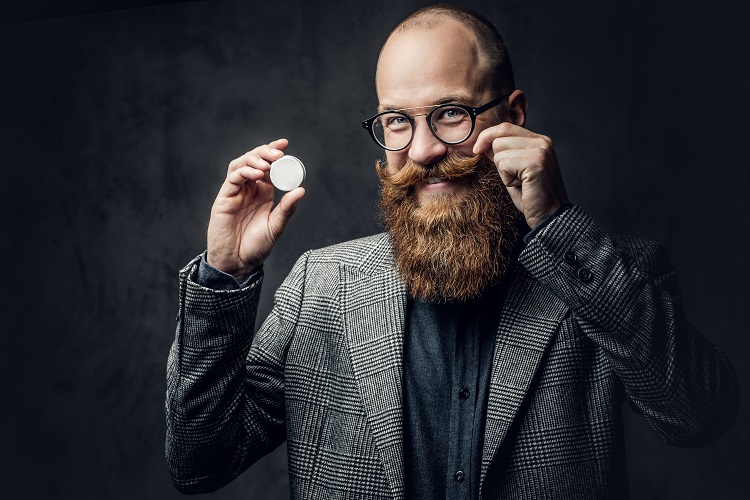
A mustache needs less kit than a beard. Three items cover almost everyone, and the fourth only applies if your style curls, points or sweeps.
| Item | What it does | Do you need it? |
|---|---|---|
| Grooming scissors | Cuts the lip line and the ends with control that a trimmer cannot match | Yes, this is the one tool you cannot skip |
| Mustache comb | Pulls every hair to its true length before you cut, trains direction, spreads wax | Yes, and a small fine-toothed one, not a beard comb |
| Precision trimmer | Sets the overall length and cleans the edges under the nose and at the corners | Yes for most styles, and essential for a pencil or lampshade |
| Mustache wax | Holds a curl, a point or an upward sweep in place all day | Only for the styled group. No wax needed for a chevron or walrus |
| Beard oil | Softens the hair and treats the dry skin that causes the itch on the upper lip | Yes, especially in the first month while the mustache grows in |
| Balm | Light hold with conditioning, softer than wax and gentler than nothing | Optional, useful for taming a full mustache without stiffening it |
Compare combs, trimmers and scissors in our guide to beard grooming tools. For oils and balms, see the full breakdown of beard care products.
Common Mustache Problems
Five problems account for almost every complaint about wearing a mustache, and four of them are fixed by the lip line or a bottle of oil.
Each of these is covered in more depth, with the fix and the product that solves it, in our guide to common beard problems.
Get the Look
Most of the mustaches people search for by name are one of the styles above, worn well. Here is what they actually are.
How We Assess and Recommend
The style guidance on this page is built on how each mustache is actually cut and worn, what growth it needs, and what it does to the proportions of a face. Where we point you to a product, our roundups are built on the ingredient or formula list, how transparent the brand is, the pattern of verified buyer feedback across retailers, and the value for the price.
We do not claim to have personally tested every product on the site, because an honest recommendation is more useful than a manufactured one. Our recommendations are independent and never influenced by paid placement.
Grooming products are cosmetics. Persistent flaking, sores or hair loss on the upper lip can have medical causes, so see a dermatologist if a problem does not settle with a good routine.
Frequently Asked Questions
These cover what men search for most about mustache styles and grooming.
There are four groups. Everyday styles that need no wax, including the chevron, natural, painter’s brush, lampshade and pencil. Styled mustaches that need wax, including the handlebar, English, Dali, imperial and cowboy. Bold styles including the horseshoe, walrus, Hungarian and Fu Manchu. Hybrids including the beardstache and the mustache with a goatee.
The toothbrush and the Zappa complete the list, which comes to eighteen recognized styles in total.
The chevron. It covers the top lip, angles down slightly at the corners, and needs no wax and no daily styling, which is why more men wear it than any other style.
It also suits the widest range of faces, and it is the base shape that the painter’s brush and lampshade are cut from.
Round faces suit styles with vertical lines, such as a horseshoe or Fu Manchu. Long or oblong faces suit wide styles like the chevron and walrus, and should avoid anything that adds length. Square faces carry a full mustache well. Oval faces suit almost anything.
Where your growth is dense matters more than your face shape. A horseshoe needs hair running down both sides of the mouth, and no face shape compensates for not having it.
Four to six weeks from clean-shaven to a full mustache you can shape. Facial hair grows roughly half an inch a month, and the upper lip is slower than the cheeks.
A handlebar, English or Dali needs three to four months, because the ends need two to three inches of length before they will hold a curl or a point.
Density is genetic, so no routine adds hair follicles you were not born with. What makes a mustache look thicker is length, training and coverage. Let it grow for at least four weeks untouched, comb it down daily so the hair covers more area, and keep the skin underneath moisturized so nothing looks dry or sparse.
If growth is the real problem rather than styling, a derma roller and minoxidil are the two approaches with evidence behind them, and minoxidil is a medication rather than a grooming product.
Not meaningfully. Growth rate is set by genetics and hormones, and no oil, balm or supplement speeds it up.
What you can change is whether you let it get there. Most men trim too early, which restarts the shape and makes the mustache look permanently short and patchy.
The corners of the mouth are the last area to fill in on almost every man. At three or four weeks they will look thin even when the rest of the mustache is coming in well.
Give it eight weeks before you decide. If the corners stay sparse, a chevron or a pencil hides it, while a horseshoe or a painter’s brush depends on exactly that area and will expose it.
Visible stubble returns within two to three days, a recognizable mustache in two to three weeks, and a full one in four to six weeks.
Shaving does not make it grow back thicker or darker. The blunt cut end feels coarser and looks denser at the base, which is where the myth comes from.
Start with a dry mustache, because wet hair sits longer than it really is. Comb every hair straight down over the lip, then use grooming scissors to cut only what crosses the top lip, working in small snips from the center outward.
Set the overall length with a trimmer and a guard if you want it shorter, then even the two ends and check your face straight on rather than up close.
Every seven to ten days for most styles, which is enough to keep the lip line clean without losing length.
A pencil needs touching up every two or three days because the line is so precise. A walrus or Hungarian needs almost nothing beyond keeping the hair out of your mouth.
Shaping is three lines: the lip line at the bottom, the top edge under the nose, and the two ends at the corners of the mouth. The lip line is the one that matters, and it defines almost every style.
Leave the top edge natural unless you are wearing a pencil, toothbrush or lampshade, which need a clean shaved line. Then train the ends in the direction the style calls for, with a comb and, if needed, wax.
Only if your style curls, points or sweeps upward. A handlebar, English, Dali or imperial does not hold without it. A chevron, walrus, horseshoe or natural does not need it at all.
If you only want to tame flyaways on a full mustache, a light balm does the job without the stiffness of a wax.
Yes, and you should, especially in the first month. Beard oil hydrates the skin under the mustache, which is where the itch comes from, and it softens coarse hair on the lip.
Use less than you would on a beard. A single drop worked into the skin and combed through is enough, and any more will look greasy on an area that small.
A chevron stops at the corners of the mouth. A horseshoe carries on, with two bars of hair running down from those corners to the jawline, which forms the upside-down U it is named for.
A chevron works on almost any growth. A horseshoe needs dense hair down both sides of the mouth, which is the part most men cannot grow.
The curl. A handlebar curls the ends upward into a loop. An English pulls them straight out to the sides and stiffens them into points that do not curl.
Both are parted at the center, both need length, and both need strong wax. The English is the narrower and more formal of the two.
It is a chevron. Thick, wide, covering the full top lip and trimmed level with the lip line, with no wax and no curl.
The aviator association gave it a name, but the cut is the standard chevron, and it is the easiest full mustache to wear.
The pencil, because it needs precision rather than density. A short chevron also works, since it uses the hair you have in the center of the lip where growth is strongest.
A beardstache is the other option. Adding stubble underneath gives the eye something else to read, so a lighter mustache still looks deliberate.
It was a common style in the early twentieth century and was worn by a number of well-known public figures. Its association with Adolf Hitler ended it, and it now reads as a deliberate provocation rather than a grooming choice.
If you want a small, contained mustache, a pencil or a short chevron gives you the same neatness without the association.
Yes, and several established styles do exactly that, including the chin strap and the Amish-style beard. It works best when the jawline growth is strong and even, because there is nothing on the lip to balance a patchy chin.
Our guide to beard without mustache styles covers the looks that hold up without one.
Comb the mustache straight down and trim every hair that crosses the top lip. That single cut solves it for most men, and it is the reason the lip line is the most important line on a mustache.
If you are growing it long for a handlebar or a walrus, train the hair sideways from the center with a comb and a light wax instead of cutting it back.
The Bottom Line
Choosing a mustache is simpler than the list of names suggests. Decide whether you are willing to use wax. If you are not, you are choosing between a chevron, a natural, a pencil or one of the big unstyled looks. If you are, the handlebar, English and Dali open up.
Then grow it for four weeks without touching it, trim the lip line, and give it eight weeks before you judge the corners. Almost every mustache that fails, fails because it was cut too early.
Wearing the mustache with a beard? Explore the rest of the beard care system.
Top 20 Beard Styles Beard Care Products Beard Grooming Tools How to Groom a Beard How to Grow a Beard Common Beard Problems
I’m a regular guy who got way too into beard care and started writing it all down. Everything here comes from my own experience with my own beard, not from a brand brief.
Pingback: Best Beard Combs: 7 Top Picks Reviewed & Compared - Beard Care for Men