
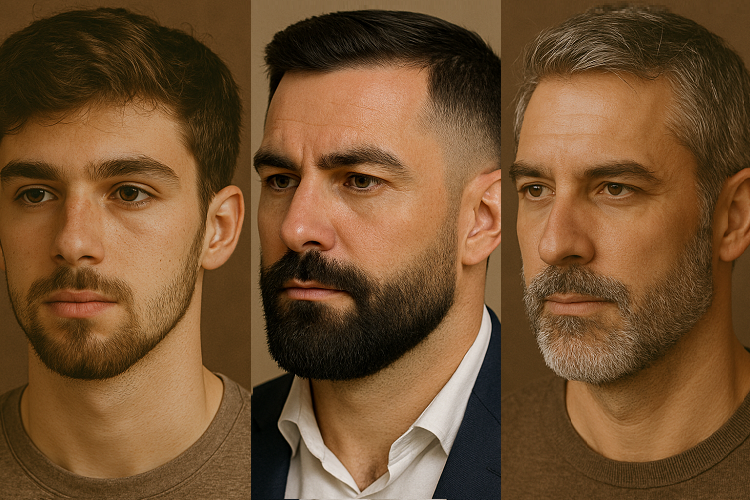
I have always believed a beard is more than just facial hair. It is a statement. And of all the beard styles for men, none makes that statement quite like the Italian beard.
When I first came across the effortlessly cool, sharply groomed look of Italian beards, I was hooked. There is something about the precision, the confidence, and that classic Mediterranean charm that instantly lifts a man’s presence. After years of shaping my own beard the Italian way and helping readers do the same, I have put together this complete guide.
Below you will find what an Italian beard actually is, what it is called, the 20 most iconic styles with the real names people search for, how to grow and shape one step by step, and the products that keep it sharp.
What Is an Italian Beard?
An Italian beard is a precisely groomed style defined by three things: a full moustache connected to the chin beard with no gap at the corners of the mouth, cleanly shaved or sharply faded cheeks, and a defined neckline set roughly one finger-width above the Adam’s apple. Lengths range from refined stubble to a full sculpted beard, but the look is always intentional, never overgrown.
That clean, connected, deliberately shaped structure is exactly what separates an Italian beard from a plain goatee, which often has a disconnected moustache, or a chin strap, which traces the jaw but skips the moustache.
What Is the Italian Beard Called?
If you are searching for the name, here it is in plain terms. The classic chin-and-moustache version is often called the Pizzo or Pizzetto in Italian. Close relatives you will see named online include the extended goatee and the chin curtain, which describe the same connected shape. Beyond that single look, “Italian beard styles” is really an umbrella for a family of sharp, Mediterranean-inspired looks, from the Garibaldi to the Balbo to the Van Dyke, all of which we cover below.
Why Italian Beards Are So Popular
Italian beards blend rugged masculinity with refined style. Made famous by icons like Andrea Pirlo and Gianluca Vacchi, they suit a wide range of face shapes and ages. With the rise of men’s grooming culture and social media, these well-defined, effortless looks have a timeless appeal that keeps them in demand year after year.
What Makes an Italian Beard Style?
An Italian beard is not just about facial hair. It is about presentation, precision, and personality. Here is what sets it apart:
a) Well-Groomed and Defined
Italian beard styles are known for their clean lines, sharp contours, and sculpted edges. Whether it is light stubble or a full long beard, it always looks intentional and refined, not overgrown or messy.
b) Mediterranean Influence
These styles pair beautifully with olive-toned skin, dark hair, and a strong jawline, reflecting classic Mediterranean features. The look often complements bold fashion choices like tailored suits, leather jackets, or casual linen.
c) Grooming as a Lifestyle
In Italy, grooming is part of everyday culture. Men regularly visit skilled barbers, use high-quality products, and take pride in their appearance. Beard oils, beard butters, and precise trimmers are all part of the Italian man’s toolkit.
The 20 Most Iconic Italian Beard Styles
Here are the twenty looks that define the Italian aesthetic, from everyday stubble to bold, historic shapes. Each one notes who it suits best so you can match it to your face and lifestyle.
1. The Sculpted Short Italian Beard
A neatly trimmed beard with clean cheek lines and a defined neckline, offering a polished, modern look. It is versatile across face shapes and is popular among Italian businessmen and influencers. The go-to choice for a sharp, everyday statement.
Best for: Almost all face shapes, especially oval.
2. The Classic Mediterranean Italian Beard
Thick, dark, and naturally full, this beard embraces rugged masculinity with minimal effort. It is especially striking on sun-kissed skin and pairs well with wavy or curly hair. Actors like Raoul Bova and Marcello Mastroianni helped make it a symbol of masculine charm.
Best for: Men with dense growth and oval or square faces.
3. The Italian Goatee (Pizzetto)
Focused around the chin and often paired with a moustache, the Italian goatee is sleek and intellectual. It sharpens angular features and adds definition to the lower face. A favorite of Italian artists and musicians.
Best for: Round and fuller faces that want added length.
4. The Designer Italian Stubble
This is not your average stubble. It is evenly trimmed, intentional, and stylish. Universally flattering and low-maintenance, it works with both tailored suits and casual wear. For more on getting the length right, see our guide to stubble beard styles.
Best for: All face types and busy schedules.
5. The Salt-and-Pepper Italian Beard
A medium-length beard that proudly shows natural grays, shaped for a sophisticated finish. Favored by stylish men over 40 who want to embrace aging with elegance. It speaks of confidence and timeless style.
Best for: Men with graying hair and oval or square faces.
6. The Italian Garibaldi Beard
Named after the Italian general Giuseppe Garibaldi, this is a full, rounded beard with a natural moustache. It is bold, expressive, and commanding, while still kept neat with a defined neckline so it never merges into the neck. Think old-world Italian masculinity.
Best for: Broad and long faces with strong growth.
7. The Balbo Beard
Named after Italian aviator Italo Balbo, the Balbo features a floating moustache that does not connect to the beard, a soul patch, and a shaped chin-and-jaw beard. It is the style most associated with Tony Stark. For the full breakdown, see our dedicated guide to Balbo beard styles.
Best for: Narrow and diamond faces, and men with patchy cheeks.
8. The Italian Van Dyke
A pointed goatee paired with a styled, separated moustache, with no connecting hair between the two. The Italian version emphasizes sharper lines and more deliberate shaping. Aristocratic and dramatic. Learn how to shape and maintain it in our Van Dyke beard guide.
Best for: Heart and diamond faces, as the point adds length.
9. The Italian Circle Beard
The circle beard combines a moustache with a rounded goatee to create harmony and fullness around the mouth. Clean, balanced, and fashion-forward, it is a sleek, urban take on Italian grooming.
Best for: Round and oval faces.
10. The Italian Anchor Beard
Named for its anchor-like shape, this style outlines the jaw and chin while keeping the moustache separated, for a sharp, balanced, slightly daring look. It is sophisticated with a hint of rebellious spirit. See our full anchor beard styles guide for shaping tips.
Best for: Oval and rectangular faces.
11. The Short Boxed Italian Beard
A short, evenly trimmed beard with crisp, boxed-in edges along the cheeks and jaw. It is one of the most professional and universally flattering Italian looks, easy to maintain and office-appropriate. Explore more in our short beard styles roundup.
Best for: Long and rectangular faces that want proportion.
12. The Corporate Italian Beard
The corporate beard is modern Italian professionalism in beard form: neatly trimmed, medium length, perfectly shaped, and conservative enough for any boardroom while still distinctly styled.
Best for: Professionals across most face shapes.
13. The Italian Fade Beard (Milanese Fade)
A full beard that blends seamlessly into a faded haircut on the sides, creating a clean, structured, modern finish. The gradual fade from skin to full density is what gives this look its sharp, barber-shaped edge.
Best for: Square and oval faces that want a contemporary look.
14. The Roman Goatee
Slimmer and more tapered than the Pizzetto, the Roman goatee keeps hair focused on the chin and upper lip while the cheeks stay clean, tapering to a soft point at the chin. It adds length and definition without the commitment of a full beard. It lives and dies by its symmetry, so a precision trimmer is essential.
Best for: Round and square faces wanting added length.
15. The Extended Goatee (Chin Curtain)
The extended goatee, also called a chin curtain, stretches the goatee along the jawline while keeping the cheeks clean. It is one of the most searched relatives of the classic Italian beard and bridges the gap between a goatee and a full beard.
Best for: Oval and rectangular faces with even jaw growth.
16. The Verdi Beard
Named after Italian composer Giuseppe Verdi, this is a shorter, rounded full beard paired with a styled moustache that is kept separate and slightly curled. It is elegant, artistic, and distinctly Italian, ideal if you like a full beard but want a refined, sculpted finish rather than a wild one.
Best for: Oval faces with strong, even growth.
17. The Italian Ducktail Beard
A full beard tapered to a pointed, V-shaped tip at the chin, blending a natural top with a sculpted bottom. It is masculine and bold while still looking intentional. For the full shaping method, see our ducktail beard styles guide.
Best for: Round and square faces, as the point slims and lengthens.
18. The Long Italian Beard (Amalfi)
Longer and more relaxed than most Italian styles, this is a medium-to-long full beard grown naturally and maintained just enough to avoid looking wild. The texture is intentionally casual and pairs perfectly with sun-kissed skin and an easy, coastal style. Pair it with our tips for long beard styles.
Best for: Oval and round faces with thick, full growth.
19. The Tapered Italian Beard
The tapered Italian beard gradually decreases in length from chin to sideburns, creating elegant elongation and a slimming effect on the face. It is one of the most flattering options because the shaping does the work of balancing your proportions.
Best for: Round and wide faces that want a slimmer look.
20. The Italian Soul Patch
The most minimalist look on this list: a small, deliberately shaped patch of hair just below the lower lip, often paired with light stubble or a styled moustache. It is understated but distinctive. For variations, see our soul patch beard styles guide.
Best for: Men who want a subtle, low-commitment statement.
Italian Beard vs Goatee vs Chin Strap
People often confuse these three, but the differences are simple. Here is a quick comparison.
| Feature | Italian Beard | Goatee | Chin Strap |
|---|---|---|---|
| Moustache | Full, connected to chin | Often disconnected or absent | None |
| Cheeks | Cleanly shaved or sharply faded | Shaved | Thin strip of hair along the jaw |
| Defining trait | Connected, sculpted, defined neckline | Hair focused on the chin | Follows the jawline only |
| Best vibe | Refined and masculine | Focused and angular | Bold and youthful |
How to Grow and Shape an Italian Beard
You do not need a barber to get this look, just patience and a steady hand. Here is the process step by step.
- Step 1: Grow it out for 4 to 6 weeks. Resist trimming early. You need enough length and density to shape accurately, especially in the chin and moustache zones.
- Step 2: Choose your variation. Decide whether you are going for a full Italian beard, a Pizzetto goatee, or designer stubble. This sets how much you keep versus shave.
- Step 3: Define the cheek line. Keep the cheeks clean while letting strong growth stay along the jaw, chin, and moustache. Go slow and keep both sides symmetrical.
- Step 4: Connect the moustache to the chin. For the classic look, make sure there is no gap at the corners of the mouth. This connection is what makes it read as Italian.
- Step 5: Set the neckline. About one finger-width above the Adam’s apple, shave everything below. A clean neckline is the single biggest factor in looking groomed rather than scruffy.
- Step 6: Condition and finish. Apply beard oil in the morning to soften and add shine, then use a balm to shape and hold the clean lines through the day.
Ready to shape any of these looks? A precision trimmer and a good balm do most of the work. See our tested picks for the best beard trimmers for men and the best beard balms to lock in those crisp Italian lines.
How to Maintain Your Italian Beard
The Italian look is all about visible maintenance, so a simple routine keeps it sharp:
- Trim every 3 to 5 days to keep edges clean and lines defined.
- Wash 2 to 3 times a week with a mild beard shampoo to stay fresh.
- Oil daily to condition the hair and the skin underneath so it never looks dry or dull.
- Balm for shape, applied after oil, to control stray hairs and emphasize the clean lines.
What Face Shape Suits an Italian Beard?
Not every style fits every face. Here is a quick breakdown:
- Oval faces: Most Italian styles work. A sculpted short beard is clean, modern, and universally flattering.
- Round faces: Try an Italian goatee or a pointed beard to add length. Avoid thick cheek coverage and focus on defining the jawline.
- Square faces: A full beard or Italian fade with soft edges balances a strong jaw while staying masculine.
- Long or rectangular faces: Go with a short boxed beard or medium stubble to keep features proportional. Add volume to the sides, not the chin.
- Heart-shaped faces: A medium-length beard or fuller goatee fills out a narrow chin. Keep the cheeks trimmed to highlight the jawline.
Which Celebrities Wear Italian Beards?
For inspiration, look to Italy’s most stylish icons:
- Gianluca Vacchi (entrepreneur and style icon): designer stubble or a short beard with crisp edges, always paired with bold outfits.
- Andrea Pirlo (footballer): a full, natural beard that exudes quiet confidence.
- Raoul Bova (actor): a light stubble or goatee with a refined, romantic look.
- Alessandro Gassmann (actor and director): a salt-and-pepper beard blending ruggedness with sophistication.
- Claudio Marchisio (footballer): a neatly trimmed short beard that complements his sharp features.
FAQs
What is an Italian beard called?
The classic version is often called the Pizzo or Pizzetto. Close relatives include the extended goatee and the chin curtain. Italian beard styles also covers named looks like the Garibaldi, Balbo, and Van Dyke.
What is the difference between an Italian beard and a goatee?
A goatee focuses hair on the chin and often leaves the moustache disconnected or absent. An Italian beard connects a full moustache to the chin beard with no gap at the corners of the mouth, plus cleanly shaved cheeks and a defined neckline. The connection and sculpted shaping are what set it apart.
What is the most popular Italian beard style?
The sculpted short beard is the most popular, known for its clean lines, versatility, and stylish yet professional appearance.
Which face shape works best with Italian beard styles?
An oval face is the most versatile. Its balanced proportions let almost any Italian beard style, from stubble to goatee to full beard, complement it naturally.
Which Italian beard style suits a round face best?
A goatee or pointed beard works best for round faces, as it adds length and creates a more defined, structured appearance.
Are Italian beards attractive?
Yes. Italian beards are consistently rated as attractive because of their clean neckline, deliberate shaping, and balanced proportions. The look reads as intentional and well-groomed rather than overgrown, which is what most people respond to.
How long does it take to grow an Italian beard?
Most men need 4 to 6 weeks of growth before there is enough length and density to shape an Italian beard properly. Apply a beard growth oil daily to the chin and moustache zones during this period to encourage even coverage.
How do I grow an Italian beard?
Grow for 4 to 6 weeks, define a clean cheek line, connect the moustache to the chin, set a neckline one finger-width above the Adam’s apple, then condition with oil and shape with balm.
How often should I trim an Italian beard?
Most Italian styles need trimming every 3 to 5 days to maintain clean edges, defined lines, and an overall polished look.
Can I grow an Italian-style beard with patchy facial hair?
Yes. Start with designer stubble, a short boxed beard, or a Balbo, all of which blend patchy areas while still looking sharp and intentional. A daily growth oil on the chin and moustache zones helps over 4 to 6 weeks.
Do Italian beards suit all hair types?
Yes. Straight, wavy, curly, and coarse beard hair can all achieve an Italian style. The difference is in the products: fine hair benefits from a thickening balm, while coarse or curly hair needs daily conditioning oil to stay soft and manageable.
What products are best for maintaining an Italian beard?
A precision trimmer, a quality beard oil, and a styling balm cover the essentials. A daily oil keeps the hair and skin conditioned, while a balm adds hold and shape control.
Final Thoughts
Since I started styling my beard the Italian way, it has become more than a grooming routine. It is part of my identity. There is a quiet confidence that comes with clean lines, intentional shape, and knowing your look is sharp without trying too hard.
Whichever of these 20 styles you choose, the principles are the same: define your lines, set a clean neckline, and condition daily. Do that, and you will carry the look with the kind of purpose and style the Italians are famous for. Browse more popular beard styles to find your next combination.
My Recent Posts

I’m a regular guy who got way too into beard care and started writing it all down. Everything here comes from my own experience with my own beard, not from a brand brief.